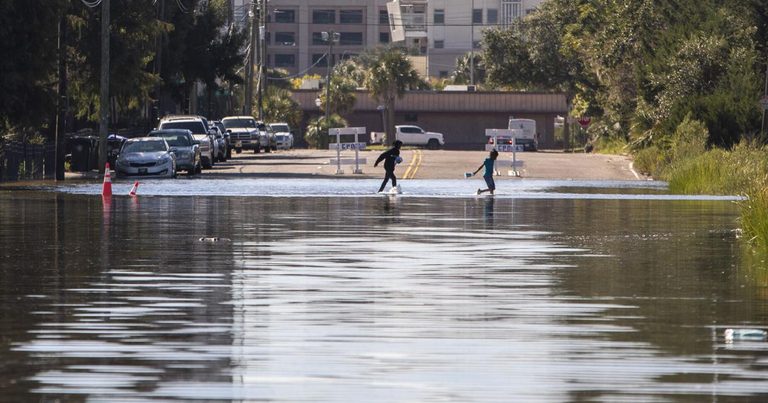
Charleston residents should prepare for the city’s highest tide of 2026, forecast for the morning of Thanksgiving Eve, Nov. 25. The Post and Courier reports the city’s TideEye tracker predicts a high tide of 8.4 feet around 8 a.m., which the National Weather Service says will cause widespread flooding across the low‑lying peninsula.
According to the National Weather Service’s Charleston office, the surge could make Market Street, East Bay, Rutledge and the Medical District impassable. A coastal flood warning is in effect from 5 a.m. to 11 a.m. on Nov. 25, and city officials warned of likely road closures during those hours.
Rain is also expected. The service briefed on Nov. 24 that gusty conditions and up to an inch of rain could fall from the afternoon of Nov. 24 through the morning of Thanksgiving, with a 39 percent chance that areas around Charleston could exceed two inches of rainfall during that period.
To help downtown residents move their vehicles, the city has opened the parking garage at 99 WestEdge Street for free parking from 6 p.m. on Nov. 24 until noon on Nov. 25. Drivers must pull a ticket at entry and scan the city’s storm parking QR code at exit; cars left after noon may be charged.
Charleston Harbor is forecast to reach minor flood stage around 9 a.m. on Thanksgiving morning. The current king‑tide cycle, the last of 2026, will end on Nov. 27, though precise tide forecasts could change. Real‑time updates on tide levels and road closures are available via TideEye at gis.charleston‑sc.gov/tideeye.
The Post and Courier notes that Charleston has logged 48 tidal‑flood events by the end of October, with 32 classified as minor. Sea‑level rise of about one foot since the early 20th century means that high tides that previously caused no impact are now more visible and disruptive. Over 70 percent of the city’s recorded major tidal floods have occurred since 2015.
Scientists attribute part of the heightened risk to a strong El Niño pattern, which raises regional sea levels and can increase rainfall. NOAA reports that the average surface temperature of the world’s oceans was more than 2.5 °F above the 20th‑century average last month, contributing to water expansion and higher tides.
What’s next: Residents should monitor TideEye for updates, avoid travel on the listed downtown streets during the warning period, and take advantage of the free parking option if needed. The city will continue to issue advisories as the tide progresses toward its peak on Nov. 25.
Sources: postandcourier.com