In a high‑profile legal move, nine members of the Kennedy family filed a motion Tuesday in the U.S. District Court for the District of Columbia to block the construction of President Donald J. Trump’s proposed 250‑foot triumphal arch at Arlington National Cemetery. The filing claims the monument would permanently cast shadows over the historic gravesites of the Kennedy family and hundreds of other fallen American heroes.
Family cites constitutional concerns
“President Donald J. Trump is attempting to unlawfully erect a massive arch that will permanently cast shadows over and damage historically significant sightlines to the existing gravesites and memorials established in the Kennedy family’s honor at Arlington National Cemetery, as well as to the memorials of hundreds of thousands of fallen American heroes,” the Kennedy family wrote in their motion.
Norman Eisen and Steve Jonas of the Democracy Defenders Fund, representing the Kennedy plaintiffs, emphasized that only Congress has the constitutional power to authorize an intrusion of this magnitude. “Today, members of the Kennedy family are joining with the other litigants in this case to protect this historic site–and to defend the rule of law and separation of powers,” they said.
Trump’s vision for a national monument
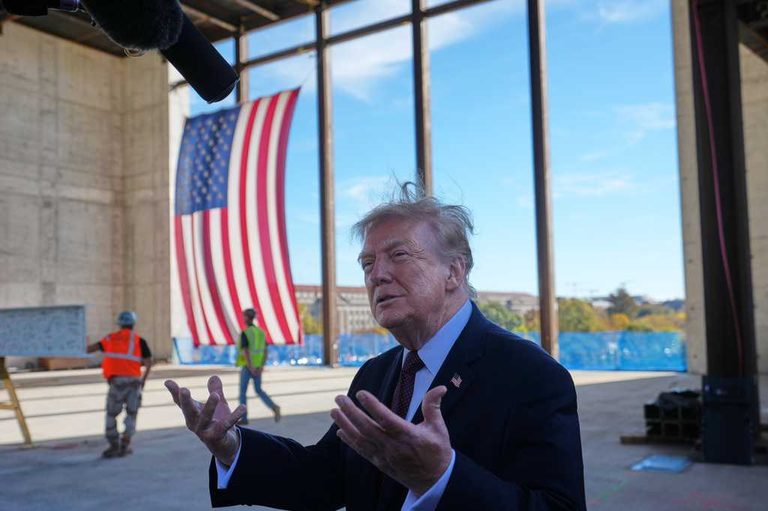
President Trump has repeatedly described the arch as a symbol of American resilience and a tribute to the nation’s fallen. He has pledged to complete the structure before leaving office in two years, positioning it as part of a broader effort to beautify the capital and honor military service.
Supporters of the project argue that a grand monument would enhance the visual landscape of the National Mall and provide a lasting reminder of the sacrifices made by service members. They contend that the arch would sit alongside iconic landmarks such as the Lincoln Memorial, Arlington House, and the Robert E. Lee Memorial without detracting from their significance.
Legal challenges already underway
The Kennedy lawsuit joins other legal actions brought by veterans groups and historic preservationists who contend the arch’s scale and location would disrupt the sightline of a row of national landmarks and diminish the solemnity of funerals at Arlington. Those opponents assert that the monument would break the historic vista that links the Lincoln Memorial to the Washington Monument and the Capitol.
Earlier this year, a separate lawsuit filed by veterans and preservationists sought to halt the arch on similar grounds, arguing that the project violates the National Historic Preservation Act and the statutory authority governing Arlington National Cemetery.
Historical context of Arlington burials
Arlington National Cemetery is the final resting place for President John F. Kennedy, First Lady Jacqueline Kennedy Onassis, Senator Robert F. Kennedy and his wife Ethel, Senator Edward M. Kennedy, and Lieutenant Joseph P. Kennedy Jr., among many other distinguished Americans. The Kennedy family’s involvement underscores the personal stakes they see in preserving the dignity of the site.
What’s next?
The court will consider the Kennedy motion alongside the existing veterans’ case. Both lawsuits request that the government halt construction until the legal questions are resolved. If the court finds that the President has overstepped congressional authority, the arch could be delayed indefinitely or cancelled.
President Trump’s administration has not yet responded publicly to the Kennedy filing, but officials have previously defended the project as a lawful exercise of executive authority to commemorate national heroes. The administration’s legal team is expected to argue that the arch falls within the President’s purview to manage federal lands and monuments.
Community reaction
Public opinion on the arch remains divided. Some Washington residents view the monument as an inspiring addition to the capital’s landscape, while others share the Kennedy family’s concerns about preserving historic sightlines and respecting the sanctity of Arlington’s burial grounds.
As the legal battle unfolds, the case highlights a broader conversation about the balance of power between the executive branch and Congress, as well as the role of private citizens and historic families in shaping national memorials.
Original reporting: WLKY Louisville — read the source article.