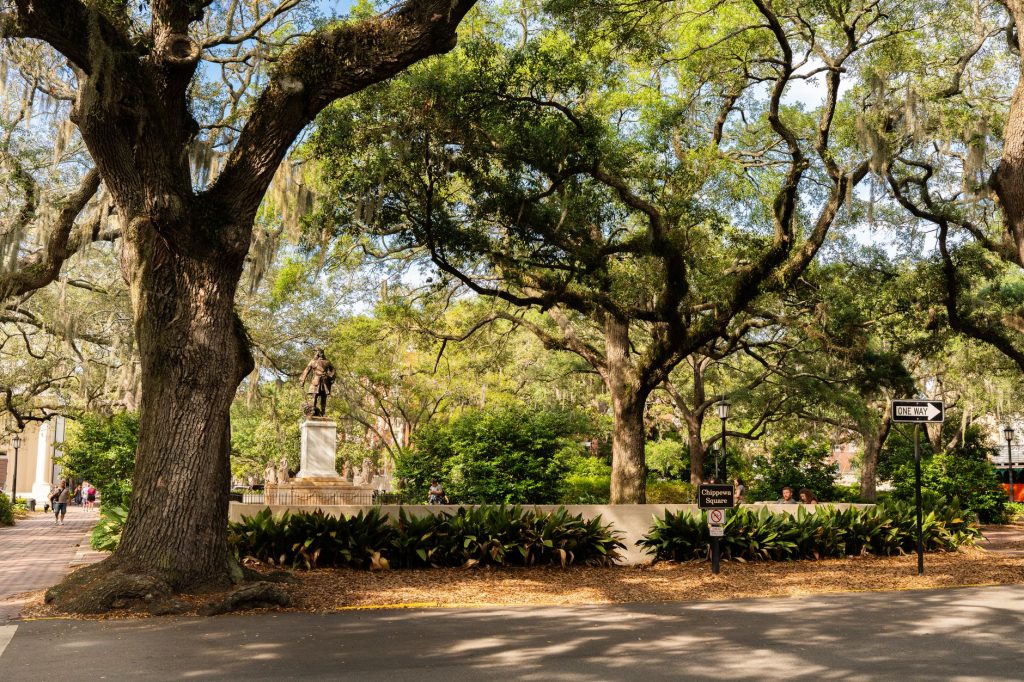
The oak trees come first. You turn off Ferguson Avenue onto the long entrance drive and the canopy closes over you, Spanish moss hanging low enough that it almost brushes the roof of the car. Most people in Savannah have driven past the signs for Bethesda their whole lives without stopping. That’s a mistake worth correcting.
Bethesda Academy, about ten miles south of downtown near the Isle of Hope, sits on 650 acres that have been in continuous use since 1740 — making it the oldest operating orphanage in the United States. George Whitefield founded it; Benjamin Franklin, his friend and sometime skeptic, helped raise funds. The original orphanage building is long gone, but the property carries its history visibly. There’s a small museum inside the main building, a chapel dating to 1925, and a cemetery where some of the early boys who died here are buried under simple markers.
What surprises first-time visitors is how alive the place feels. Bethesda still operates as a school and residential program for at-risk young men. The grounds aren’t a preserved relic — they’re a working campus. You’ll hear students on the athletic fields. Staff move between buildings. It has the texture of a place that has kept adapting rather than fossilizing.
The historical museum is modest but worth your time. It covers the full arc from the colonial era through the various fires and rebuildings, the Civil War period when the property changed hands, the late 19th-century revival. The interpretive panels are clear and unsentimental. Admission is free, though donations are welcomed and the organization genuinely depends on them.
Outside, you can walk the grounds freely. The chapel is usually open during the day and is one of the more quietly beautiful spaces in the Savannah area — plain wooden pews, good light, no gift shop attached to it. Behind the main buildings, a nature trail runs through a section of the maritime forest down toward the salt marsh. It’s not a long hike, maybe a mile total, but the transition from live oak canopy to open marsh grass is abrupt and striking. Bring bug spray from May through October.
The cemetery is small and easy to overlook. A few dozen graves, some marked only with numbers because the names were lost. It doesn’t try to be dramatic about this. It just sits there under the trees.
People who come expecting a polished heritage attraction sometimes leave a little puzzled. There are no costumed interpreters, no audio tour, no café. The parking lot is unpaved. What Bethesda offers instead is a genuinely layered place — historical, functional, and oddly affecting — that hasn’t been packaged for consumption. That’s rarer in Savannah than you’d think.
The grounds are generally open to visitors on weekdays and Saturday mornings; call ahead or check their website before making the drive, since hours can shift around the school calendar. The drive itself, following Ferguson Avenue south through the marsh, is worth it even on its own terms.