U.S. District Judge Mustafa Kasubhai, who has previously criticized Immigration and Customs Enforcement (ICE), issued a new order on Nov. 2 requiring the agency to provide body‑worn camera video and detailed arrest records for all arrests made after Sept. 1. The order follows a February preliminary injunction that limited ICE’s ability to make warrantless arrests without first assessing an individual’s risk of fleeing.
Local testimony drives the ruling
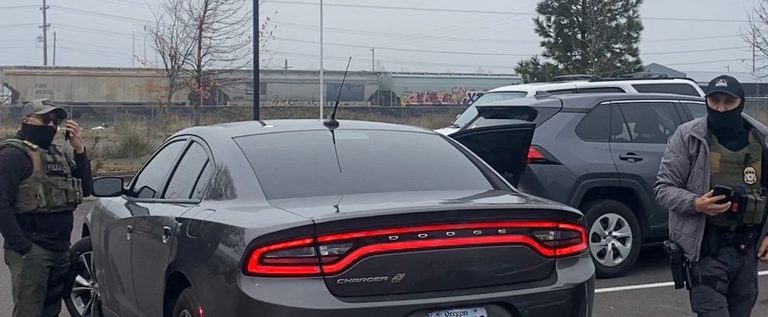
The judge’s 50‑page opinion relied heavily on the testimony of an Eugene resident, identified only as H‑F‑M‑J, who was arrested on July 3. H‑F‑M‑J, a landscaper and dishwasher who entered the United States from Mexico, described being stopped by three masked ICE officers who claimed to have an arrest warrant but never showed him any paperwork or asked for his name.
According to his September testimony, the officers pressured him to sign a detention‑avoidance form written solely in English, promising a $2,500 payment. He signed without understanding the document, later filing a habeas corpus petition that secured his release the same day. The judge noted that H‑F‑M‑J’s account was consistent with other witnesses and highlighted discrepancies in ICE’s own paperwork.
Evidence of errors and fabrications
Kasubhai found a pattern of mistakes ranging “from typos to outright fabrications.” He cited an ICE officer who admitted to running license‑plate checks at a local Walmart until finding a vehicle whose owner was allegedly unlawfully present. In another case, an ICE form (I‑213) for a detainee named H‑D‑G‑H contained information about a different passenger, suggesting the narrative was copied and falsified.
The judge concluded that ICE officers “have continued to conduct warrantless arrests without adequately making and documenting the requisite particularized finding of escape risk.” He emphasized that no evidence showed ICE assessed any escape risk before arresting H‑F‑M‑J or the other individuals involved.
What the new order requires
Effective immediately, ICE must turn over all body‑worn camera footage from arrests beginning Sept. 1 to the plaintiffs’ legal team at Innovation Law Lab. The agency must also provide unredacted I‑213 forms and any other documentation related to warrantless arrests in Oregon.
Kasubhai rejected the long‑standing “presumption of regularity” that government officials act in good faith unless proven otherwise, stating that the evidence in this case “proves as much.” He warned that without transparent records, the court cannot verify whether ICE complies with the constitutional requirement to assess escape risk before depriving individuals of liberty.
Broader implications
The ruling underscores ongoing concerns about ICE’s enforcement practices in Oregon and across the nation. Advocacy groups, including Innovation Law Lab, have argued that the agency’s aggressive tactics aim to meet detention quotas rather than protect public safety. By mandating video evidence and full documentation, the court seeks to ensure accountability and protect the rights of individuals who may be illegally present but are entitled to due process.
ICE has maintained that the July 3 arrest was based on a “field warrant,” a warrant issued on the spot after officers encounter someone they believe is unlawfully present. The agency, however, has not produced any record of such a warrant for H‑F‑M‑J, and the judge found the claim unsubstantiated.
Local officials and community leaders have welcomed the decision, noting that transparency is essential for maintaining trust between federal law‑enforcement and Oregon residents. The order also aligns with broader efforts to ensure that immigration enforcement respects constitutional protections and does not overreach under the guise of public safety.
Original reporting: Homepage – Lookout Eugene-Springfield — read the source article.