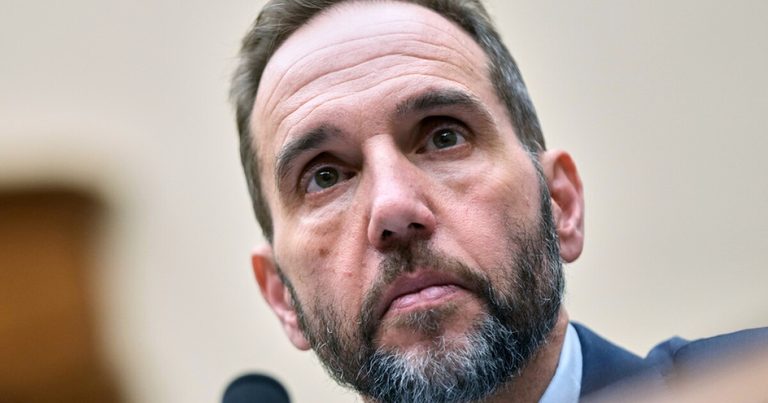
In a motion filed Tuesday in the Middle District of Tennessee, Special Counsel Jack Smith asked a federal judge to dismiss Sen. Marsha Blackburn’s lawsuit that alleges a grand‑jury subpoena for her cell‑phone toll records violated her constitutional rights. Smith’s attorneys, Rascoe Dean and Christopher C. Sabis, contend the request was a routine investigative measure aimed at confirming who President Trump was calling during his effort to block the certification of the 2020 election on Jan. 6, 2021.
Legal basis for the subpoena
The motion explains that the Special Counsel’s Office obtained four days of telephone toll records showing dates and times of calls, without revealing any call content. Those records help investigators verify whether President Trump and his allies attempted to contact members of Congress to further delay certification of the election results, a key element of the Jan. 6 probe.
Why the lawsuit fails, according to the administration
Smith’s team argues that prosecutors are protected by absolute immunity for actions taken in the course of their official duties. Allowing Blackburn’s suit to proceed would open the floodgates for litigation against federal officials whenever they perform lawful investigative work. The motion also asserts that the Nashville court lacks jurisdiction over conduct that occurred in Washington, D.C., and that the Department of Justice, named as a defendant, has not yet responded.
Blackburn’s claims
Sen. Blackburn, a Republican from Tennessee, filed the suit in September, accusing Smith of a “grave abuse of authority” and asserting that the subpoena infringed on her First Amendment and privacy rights. She framed the request as an overreach of law‑enforcement powers, challenging the use of grand‑jury subpoenas, non‑disclosure orders, and the review of non‑content records.
Administration’s response
Smith’s attorneys maintain that the subpoena was a lawful, narrowly tailored tool essential to reconstructing the timeline of communications surrounding the Jan. 6 protests. They note that obtaining toll records is a standard practice used by investigators nationwide to confirm call timing without accessing the substance of the conversations.
The motion further emphasizes that President Trump’s attempts to intimidate potential witnesses were well‑documented, reinforcing the need for robust investigative safeguards.
What’s next?
The judge will consider the motion’s arguments on immunity, jurisdiction, and the legitimacy of the subpoena. If the court grants the dismissal, Blackburn’s case will end without a trial. If not, the dispute could proceed, potentially setting a precedent for how federal investigators may use phone‑record data in high‑profile investigations.
Regardless of the outcome, the filing underscores the tension between congressional officials and the federal investigative apparatus in the aftermath of the Jan. 6 protests, a conflict that continues to shape national discourse on accountability and the rule of law.
Original reporting: NewsChannel 5 WTVF (Scripps) – local — read the source article.