John Knox Village in Lee’s Summit has completed a new emergency medical services (EMS) station, providing on‑site housing and equipment for its ambulance crew—a development that could improve response times for village residents and the broader Kansas City metro area.
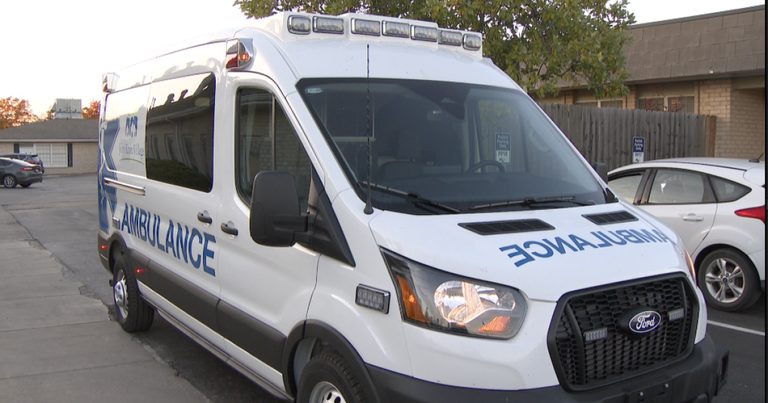
According to KSHB, John Knox Village is the only life‑plan community in the United States that owns and operates its own ambulances. The decision to run its own service is driven by the belief that “time is muscle” in cardiac events, a point made by Terry Egelston, the village’s Director of Public Safety and former firefighter.
The new station replaces a makeshift arrangement in which the 40‑person EMS staff lived in the back of a nursing home while ambulances were parked outside. Residents helped raise enough money to construct a purpose‑built facility that includes an ambulance bay and living quarters for crew members while on shift. Egelston said the building “is your home” for staff who spend roughly one‑third of their lives on duty.
The impact of rapid response is illustrated by a recent incident involving resident Dick Kneip. Kneip told KSHB that he flat‑lined for four minutes after feeling ill, but security personnel arrived within two minutes and EMS arrived three minutes later. He credited the swift arrival for his survival, noting, “If I had not gotten there in such a short amount of time they would not have been able to save me.”
While the station primarily serves John Knox Village residents, the EMS crew also provides non‑emergency patient transfers for the City of Lee’s Summit and acts as a backup unit for the city and the broader Kansas City metropolitan area. KSHB reported that the village transfers thousands of non‑emergency patients each year, extending its reach beyond the campus boundaries.
In addition to the new building, John Knox Village is replacing its aging fleet with three new ambulances, further enhancing its capacity to respond quickly to emergencies throughout the region.
The completion of the EMS station marks a significant investment in local health infrastructure, offering both residents and neighboring communities faster, dedicated emergency services.
Sources: kshb.com