When Harry Middleton Hyatt, an Episcopal priest and folklorist, arrived in Jacksonville in July 1937, he set up shop in the lobby of the historic Wynn Hotel (today known as Genovar’s Hall). While staying at the nearby Mayflower, he used a dictation machine to capture the oral traditions of Black residents across the city.
A Family’s Encounter with the Boo Hag
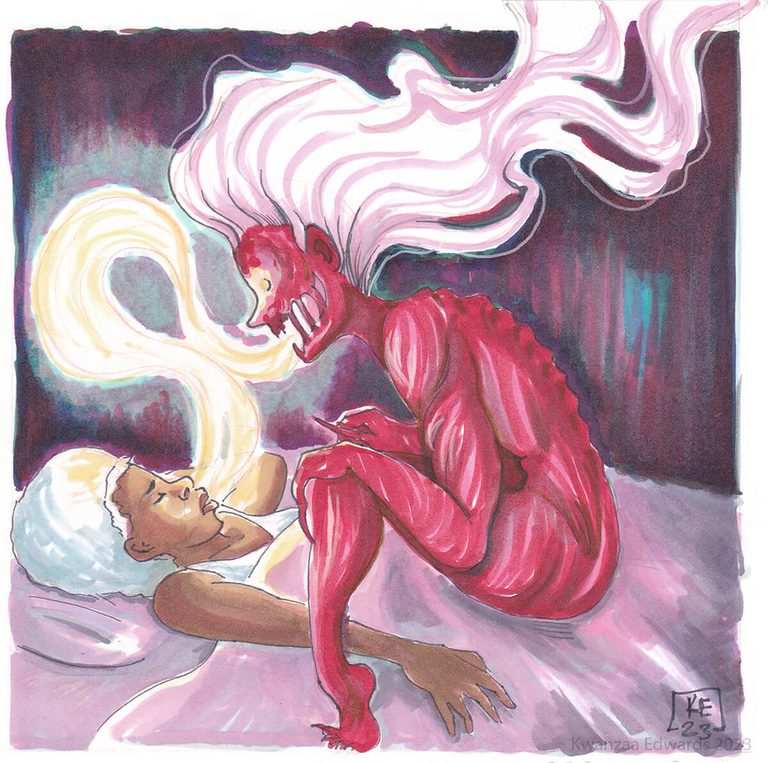
One of Hyatt’s informants, identified only as Informant 562, recounted a terrifying childhood experience with a “boo hag,” a type of witch from Gullah Geechee lore that slips into homes at night to ride sleeping victims and drain their breath. The narrator described being about ten years old when a dark woman would climb onto his bed around 4 a.m., choking him repeatedly. The attacks lasted for weeks, then shifted to his younger brother, who grew thin from the nightly assaults.
Desperate for relief, the family turned to a local conjure woman—referred to as the “Old Lady.” She advised placing straw crosses in the center of the bed, which temporarily halted the witch’s choking. When the straws failed to protect the brother, the conjure woman prescribed burning sulfur in every room, sealing windows shut for a month. After the ritual, the choking stopped, though the witch would occasionally return on full‑moon nights, laughing but no longer harming the children.
Hyatt’s Folklore Mission
Hyatt, who held master’s and doctor‑of‑divinity degrees from Kenyon College and Oxford, devoted his career to documenting American folkways. After publishing a detailed study of Adams County, Illinois, in 1935, he turned his attention to African‑American hoodoo—a syncretic magical system blending West and Central African traditions with European, Native American, and Christian elements.
Traveling from New York to New Orleans and up the Mississippi, Hyatt interviewed nearly 1,600 people, often hiring Black assistants to locate willing storytellers. He paid informants for their time, a practice that helped him gather candid accounts during the Great Depression. Many of his sources remained anonymous; some were prostitutes, and two identified as gender‑nonconforming “boy‑girls,” whom Hyatt respectfully referred to with both pronouns.
Local Roots, Wider Significance
The boo hag story is part of a broader Gullah Geechee tradition that stretches from North Carolina’s Cape Fear to St. Augustine, Florida. Scholars recognize the tale as a regional variant of the worldwide phenomenon of sleep paralysis, where cultural narratives shape the experience of a night‑time “haint.”
Hyatt’s five‑volume collection, titled Hoodoo—Conjuration—Witchcraft—Rootwork, remains one of the most comprehensive records of hoodoo lore. The Jacksonville account, captured in the Wynn Hotel’s bustling LaVilla entertainment district—once a hotspot for performers like Louis Armstrong—offers modern readers a vivid window into the city’s multicultural past.
Today, Jacksonville’s historic neighborhoods continue to celebrate their diverse heritage. Local museums and cultural groups are increasingly highlighting Gullah Geechee contributions, ensuring that stories like the boo hag remain part of the city’s living memory rather than forgotten folklore.
Original reporting: Jacksonville Today — read the source article.