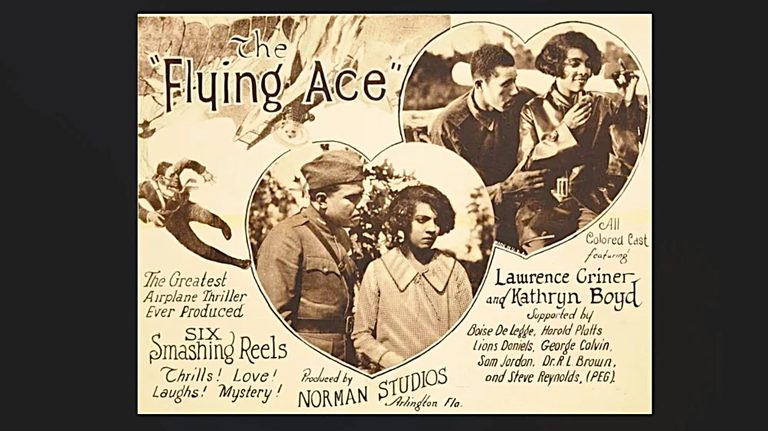
Jacksonville’s rich film heritage returns to the spotlight this week as the Jacksonville Symphony prepares to debut a brand‑new orchestral score for “The Flying Ace,” a 1926 silent feature originally produced for Black audiences by Norman Studios. The event, free to the public, highlights the city’s historic role in early cinema and showcases the talent of six contemporary composers.
Local roots and historic significance
Norman Studios, located at 6337 Arlington Road, was one of roughly 30 silent‑film studios operating in Jacksonville between 1908 and 1917 before the industry migrated to California. Founded by Richard Norman, the studio specialized in “race films” that portrayed African‑American characters without the stereotypical caricatures common in mainstream movies of the era. “The Flying Ace” is the only complete feature‑length film from the studio that survives, and it tells the story of a Black World War I pilot who rescues a kidnapped woman.
Commissioning a new score
The idea for a fresh score began in 2022 when composer Tarik O’Regan spotted Norman Studios posters at the Cummer Museum of Art and Gardens. He mentioned the discovery to Symphony Vice President and Artistic Administrator Tony Nickle, who recognized the opportunity to connect a local historic treasure with today’s audiences. Nickle located the digitized film at the Library of Congress and set out to commission a modern orchestral accompaniment.
Because the original reel runs about an hour and was originally presented on six separate reels, Nickle decided to enlist six composers rather than a single writer. This approach allowed each composer to focus on a specific reel while maintaining a cohesive musical narrative.
Composer lineup
Grammy‑nominee Carlos Simon serves as lead composer, creating the main themes and music for the opening reel. The remaining composers—Jongnic Bontemps (known for “Transformers: Rise of the Beasts”), Kathryn Bostic, Nathalie Joachim, Allison Loggins‑Hull, and Levi Taylor—each contributed roughly ten minutes of music for the other reels. Bontemps, who has never scored a film without dialogue or sound effects, described the challenge as “having to write music that supports the action, the explosions, the sound effects, and even the dialogue, all through the orchestra.”
Despite the logistical complexity, the six composers reported that the music blended seamlessly. “Even though each section reflects a different musical voice, they all sound like one piece,” Bontemps said.
Community event and performances
The Norman Studios Silent Film Museum will host a free community event on Wednesday, Nov. 11, at 5 p.m. in the Rita F. Reagan Set Building—the original film stage on Commerce Street. Richard Norman’s grandson and three of the composers will attend, and the symphony will offer masterclasses on film‑score composition and sync technology.
The premiere of the newly orchestrated score is scheduled for Saturday, Nov. 14, at 7:30 p.m. in Jacoby Symphony Hall on Water Street. Tickets are available through the Jacksonville Symphony box office.
Why this matters for Jacksonville
Beyond entertainment, the project underscores Jacksonville’s contribution to early American cinema and celebrates a legacy of inclusive storytelling. By pairing historic film with contemporary orchestral music, the city honors its cultural past while providing a vibrant artistic experience for families and film enthusiasts alike.
Original reporting: Jacksonville Today — read the source article.