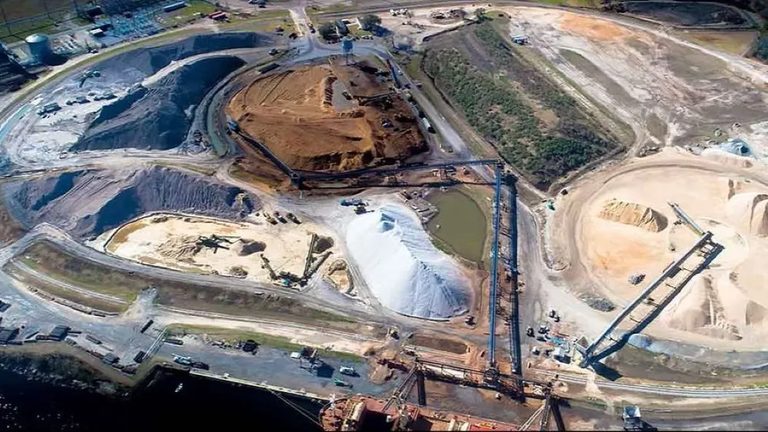
Jacksonville Mayor Donna Deegan announced Tuesday that the city has issued a formal order requiring Keystone Terminal to cease accepting coal ash shipments from Puerto Rico. The facility in Talleyrand has 45 days to relocate any ash already stored to a “lawful facility” and to obtain the city solid‑waste permit that all similar businesses must hold.
Health and environmental concerns drive the order
Deegan warned that coal ash is not a benign material. According to the EPA, it can contain mercury, cadmium and arsenic, and without proper management it may contaminate waterways, groundwater, drinking water and air. She referenced the National Geographic documentary “From the Ashes” to illustrate the potential devastation for communities when ash is mishandled.
Keystone’s response
Keystone Terminal issued a statement saying it values its role as a community partner and is working with the city to resolve the issue. The company expressed disagreement with the need for the additional permitting level but pledged to cooperate with city officials.
Legal action and local support
The city’s move was praised by John November, general counsel and executive director of the Public Trust for Conservation, and by the St. Johns Riverkeeper. Both groups filed a Clean Water Act and Resource Conservation and Recovery Act lawsuit on Aug. 19, alleging illegal discharges of coal ash into the St. Johns River, improper handling during transport and storage, and groundwater contamination.
“The mayor and city have taken a tremendous step forward in ensuring that our regulations and laws are respected by all entities operating in Jacksonville,” November said. He added that the city’s certificate of necessity will allow officials to evaluate whether importing coal ash from Puerto Rico truly benefits local residents.
Background on coal ash shipments
Jacksonville began receiving coal ash after Puerto Rico banned permanent ash storage in 2017. Barges transport the material up the St. Johns River to the Talleyrand site, where it is temporarily stored before being shipped to a landfill in Folkston, Georgia. Riverkeeper data claim Keystone has handled more than 2 billion pounds of ash since 2022, often in unlined areas lacking adequate safeguards.
Critics note that ash is a very light substance that can become airborne and travel across the river, potentially affecting all Jacksonville neighborhoods. They cite a March 2021 barge accident that spilled up to 9,000 tons of ash into the river as evidence of the transport risk.
Next steps for permitting
If Keystone applies for the required solid‑waste permit, the process will include a City Council review, a public hearing, and opportunities for nearby property owners to comment. “That is how we can verify an operation is safe or harmful for our neighbors,” Deegan said.
City Blight Initiatives Manager Al Ferraro added that all businesses handling solid waste must follow the same certification process, emphasizing fairness and community protection.
Implications for Jacksonville residents
The order underscores Jacksonville’s commitment to safeguarding public health and the environment while ensuring that any industrial activity complies with local ordinances. Residents can expect regular progress reports from Keystone as the removal and relocation of ash proceeds.
Original reporting: Jacksonville Today — read the source article.