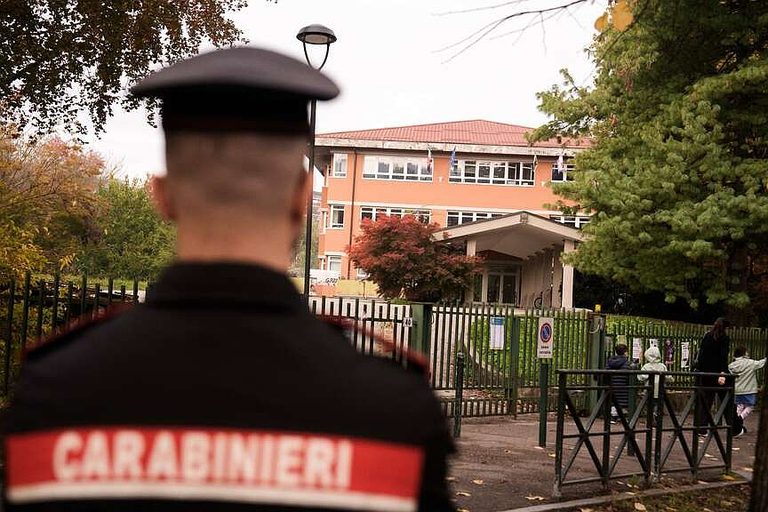
Italian Prime Minister Giorgia Meloni told the nation that law‑enforcement officials have found no concrete threat behind the recent wave of bomb‑threat emails sent to schools. The email, which prompted the evacuation of thousands of classrooms on Wednesday, was part of a broader series of hoaxes targeting European institutions, including airlines and broadcasters.
Scope of the threat
The Italian Education Ministry reported that the email was received by over 6,300 schools nationwide, though it is not yet clear how many were actually evacuated. Similar threats were reported in Ireland, Scotland and Northern Ireland, but those countries did not carry out evacuations.
Government response
Meloni released a video message after meeting with her Cabinet, secret‑service officials and cybersecurity experts. She said, “Whoever is sending them wants our fear, lost days, suspicion and chaos.” Italian police are working with European counterparts to trace the source of the messages.
Defense Minister Guido Crosetto described the emails as an attempt to “sow terror, or create concern,” adding that anyone can use readily available tools to send such threats. “It’s too easy,” he said.
Comments from officials
Education Minister Giuseppe Valditara told reporters that, given the sheer number of schools involved, the real risk was “almost non‑existent.” He emphasized that authorities had found no suspicious items and no one was injured.
Police in Scotland and Northern Ireland have both classified the messages as hoaxes, stating they do not represent a credible threat. Irish police confirmed a “generic communication” was sent to several educational institutions.
International context
The bomb‑threat emails follow a recent spate of false alerts across Europe, including fake bomb threats to dozens of flights, attacks on supermarket refrigeration systems and drone incursions. Italian Foreign Minister Antonio Tajani said his personal data had been leaked to the dark web, and Meloni blamed pro‑Russian hackers for the campaign.
The company overseeing construction of the Brenner Base Tunnel, which will link Austria and Italy, also reported a hack last month, underscoring the broader cyber‑security concerns facing the region.
Original reporting: Texarkana Gazette — read the source article.