Sign up for essential local news delivered to your inbox — free.
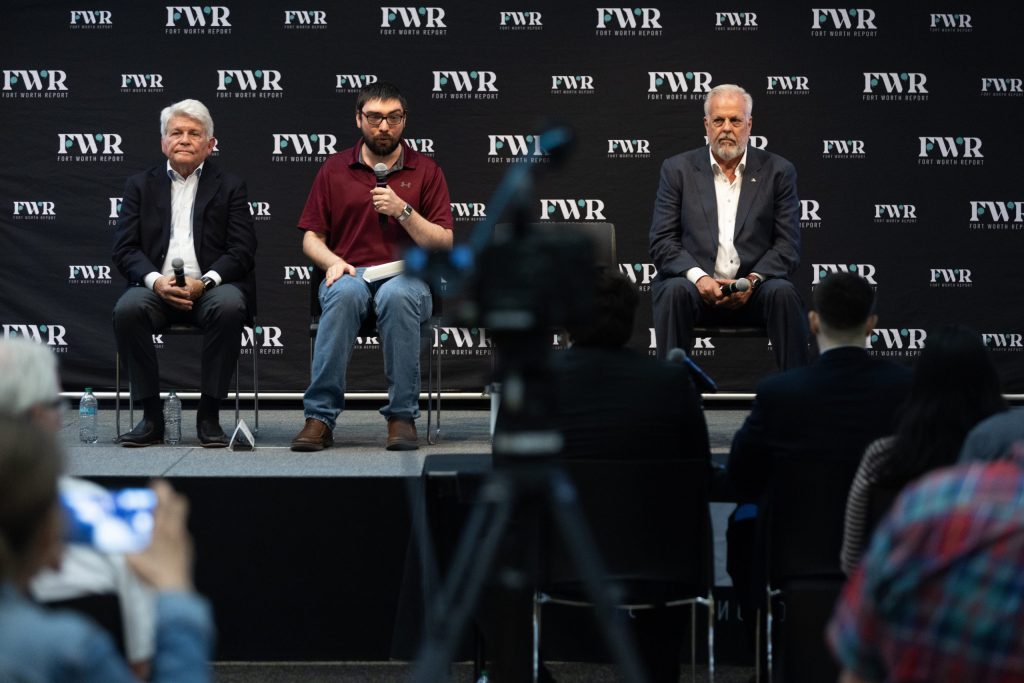
At a recent mayoral forum in Arlington, the personal finances of incumbent Mayor Jim Ross became a focal point of debate between him and challenger Steve Cavender. The exchange came during a forum at Tarrant County College Southeast Campus attended by roughly 30 community members. Also on stage was candidate Hunter Crow; Shawn Mallory did not attend.
Ross, who is seeking a third term, acknowledged a past federal tax debt that he said has since been resolved. Cavender responded by pointing out that Ross had carried an IRS lien when he first took office and argued that owing the federal government should factor into voters’ considerations about leadership. Ross countered by noting Cavender has faced his own financial issues and accused the challenger of using personal matters to distract from city business.
The discussion moved from finances to policy. Cavender emphasized stronger, more community-focused code enforcement and said the city should educate residents about rules rather than relying primarily on fines. He also complained that south Arlington has not shared equally in the gains from the city’s Entertainment District expansion and urged reallocating resources to help neighborhoods that feel left behind.
Mayor Ross focused on broader development strategies, highlighting a new downtown planning tool—form-based code—that he said can make development faster, less costly and more conducive to producing a range of housing types. He stressed the difficulty of expanding housing options in a city that is largely built out and suggested flexible policy tools are the way forward. Ross also pushed back on Cavender’s criticisms by raising questions about Cavender’s past development partnerships and relationships with former city officials.
Hunter Crow, a college student and the third candidate on stage, echoed concerns about city upkeep and limited public transportation but offered few specifics during the forum. The night left voters with a clear sense that questions about fiscal transparency, neighborhood equity and how to expand affordable housing will be central issues as the campaign continues.