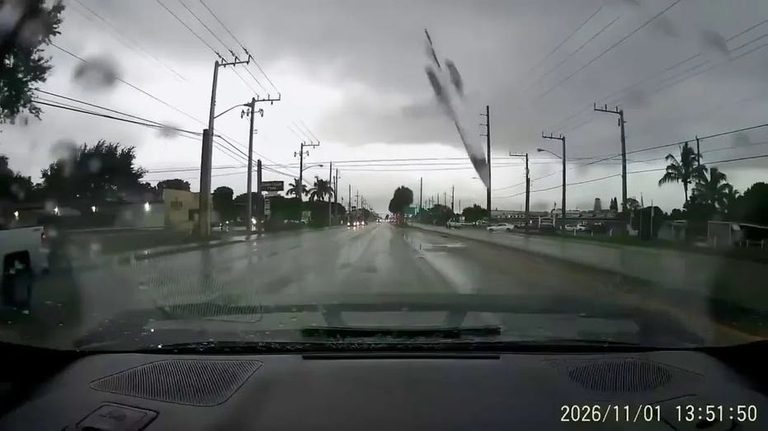
Federal investigators have recovered a key piece of the private Learjet 60 that crashed in Palm Beach County, Florida, on Sunday, indicating that the aircraft suffered an in‑flight breakup. The left tail elevator – a control surface that manages the plane’s pitch – was found in three fragments, with one piece located nearly four miles from the main impact site.
Evidence Points to Early Separation
National Transportation Safety Board (NTSB) member Thomas B. Chapman told reporters that the left tail elevator fragments were discovered between 1.3 and 3.8 miles away from the crash location. “That suggests the component likely separated from the aircraft before the final impact,” Chapman said. Investigators will examine the broken pieces to determine whether the loss of the elevator contributed to the loss of control or whether aerodynamic forces simply tore it away during the crash.
Possible Role of Pilot Maneuvering
Former NTSB investigator Greg Feith, speaking to Fox News, said the debris pattern supports the theory of an in‑flight breakup caused by an attempt to level the jet. “The airplane leveled off at about 8,000 feet for a very short period of time,” Feith explained. “That may have been one of the pilots trying to control the airplane, and in doing so over‑stretched the structure of the aircraft, causing those parts to fail and come off.” He added that the proximity of the elevator fragments to the main impact site indicates the separation occurred at a relatively low altitude.
Victims Identified
The crash claimed nine lives, including Austin tech entrepreneur Adam Robinson, 45, his wife Helen Sharp, 40, and their two young children, Emma, 4, and Charlie, 2. The family’s nanny, Anita Maria Cetina, also perished, as did a second couple, Rachael Reed and Charmi Fehr. The aircraft’s captain, Jeff Gregory, 55, and copilot, Nathalia Gadelha Filgueiras, 20, were among the dead.
Weather and Flight Data Under Review
Investigators have identified weather conditions as a major focus of the probe. The crew reported icing and moderate turbulence at approximately 35,000 feet shortly before the aircraft experienced a rapid loss of altitude. The jet was equipped with a cockpit voice recorder, but the device has not yet been located, and officials cannot confirm whether it was on board at the time of the crash.
Next Steps in the Investigation
The NTSB plans to gain access to the impact crater by Wednesday, pending clearance from public utility crews who are currently securing the site. Once the crater is accessible, investigators will conduct a detailed examination of the wreckage and debris field to piece together the sequence of events that led to the tragedy.
While the investigation is ongoing, the recovered elevator fragments provide a tangible clue that the aircraft’s structural integrity may have been compromised before impact. Authorities will continue to analyze flight data, weather reports, and pilot actions to determine the precise cause of the crash.
Original reporting: Fox News (HLL/CB) — read the source article.