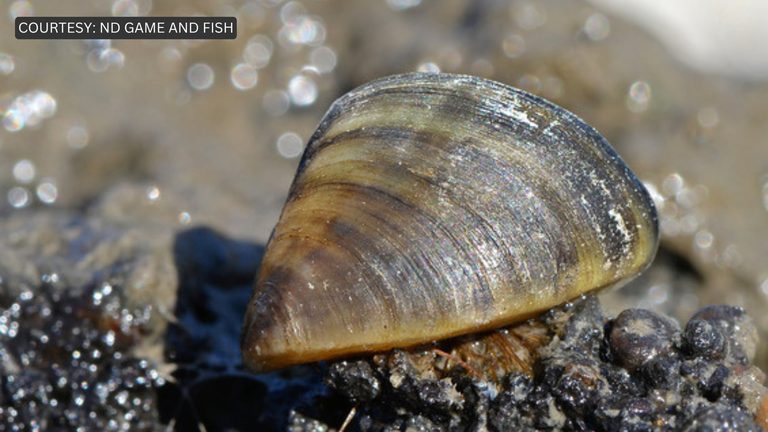
North Dakota Game and Fish has confirmed the presence of the invasive zebra mussel in Lake Sakakawea, the state’s largest reservoir. The discovery was made in the lake’s easternmost section during a routine sampling effort conducted by agency staff.
Initial findings suggest a limited outbreak
According to the agency, the mussels were found in a single sampling location and there is no evidence yet that the infestation has spread beyond that spot. “Current findings suggest the mussel infestation is isolated,” a Game and Fish spokesperson said. The agency plans to conduct additional sampling in the coming weeks to determine the full extent of the problem.
Cold water may slow the invasion
Officials noted that dropping water temperatures this fall are likely to curb the immediate spread of zebra mussels. The species thrives in warmer water, and the cooling conditions in Lake Sakakawea should act as a natural brake on rapid expansion.
Why zebra mussels matter
Zebra mussels are a well‑known invasive species that can cause significant ecological and economic damage. They attach to hard surfaces, clog water intake pipes, and outcompete native aquatic life for food. In other states, large infestations have led to costly cleanup efforts and costly damage to municipal water systems.
Agency response and next steps
The North Dakota Game and Fish Department is coordinating with the U.S. Army Corps of Engineers, which manages the lake, to develop a response plan if the infestation proves more widespread. The agency will increase monitoring efforts this winter and spring, focusing on high‑risk areas such as boat launches, marinas, and popular fishing spots.
In the meantime, the department is urging lake users to take precautions to prevent the spread of invasive species. Boaters and anglers are asked to clean, drain, and dry all equipment before moving it to other water bodies, a practice commonly referred to as “Clean, Drain, Dry.” This simple step helps stop zebra mussels and other invasive organisms from hitching rides on boats, trailers, and fishing gear.
Community involvement
Local residents and recreational users are encouraged to report any additional sightings of zebra mussels to the Game and Fish hotline at 1‑800‑555‑1234. Early detection is critical for containment, and community vigilance can make a significant difference in protecting the lake’s health and the region’s water resources.
Lake Sakakawea provides drinking water, irrigation, and recreation for thousands of North Dakota residents. Protecting it from invasive threats aligns with the state’s broader commitment to preserving natural resources for families and future generations.
Original reporting: KFYR-TV Bismarck (news) — read the source article.