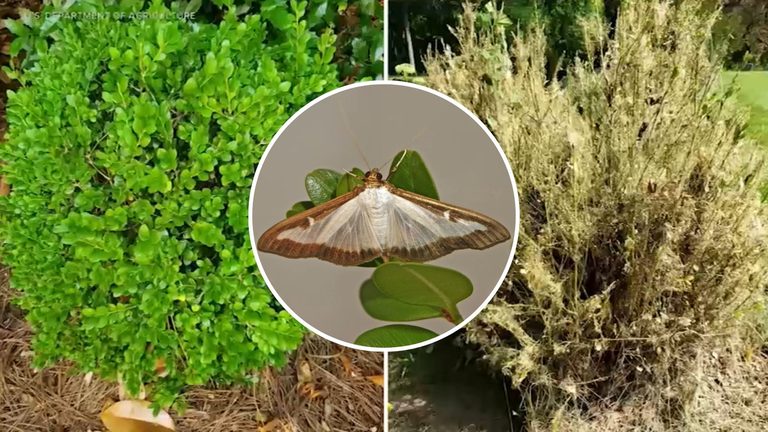
New York State’s Department of Agriculture and Markets issued a warning on Tuesday after the invasive box tree moth was detected in Nassau County, marking the first confirmed sighting on Long Island. The discovery expands the pest’s known range beyond the 34 upstate counties already under a quarantine-like restriction.
What the box tree moth does
The box tree moth (Cydalima perspectalis) begins its life as a greenish‑yellow caterpillar marked with black stripes and spots. These larvae feed voraciously on the foliage of boxwood shrubs, stripping the top layer of leaves and, in severe infestations, killing the plant. Boxwoods, a staple of many residential landscapes and one of the oldest cultivated plants in the United States dating back to the 1600s, are especially vulnerable.
Local impact and expert advice
“This is the first time we have had them on Long Island,” said Evan Dackow of Jolly Green Tree and Trunk Care, a local arborist service. Dackow explained that heavy infestations can quickly devastate boxwoods, leaving homeowners with dead or severely damaged shrubs.
Residents are encouraged to inspect their properties for the distinctive white‑and‑brown adult moths and the characteristic greenish‑yellow caterpillars. If a high‑value boxwood plant is spotted, Dackow recommends contacting a certified arborist immediately to assess the situation and discuss treatment options.
State response and reporting
The Department of Agriculture and Markets is asking the public to report any suspected sightings. While the exact location of the September discovery was not released, officials stress that early detection is critical to preventing the pest from spreading further across Long Island.
To report a sighting, residents can call the state’s pest hotline at 1‑800‑555‑1234 or submit a report through the department’s online portal. Prompt reporting helps authorities coordinate containment efforts and protect the region’s beloved boxwood plantings.
How to protect your boxwoods
Homeowners can take several steps to reduce the risk of infestation:
- Regularly inspect boxwoods for signs of chewing or the presence of caterpillars.
- Remove and destroy any visible larvae or damaged foliage.
- Consider professional treatment if an infestation appears extensive.
- Maintain plant health through proper watering and fertilization, as vigorous plants are more resilient.
By staying vigilant and acting quickly, Long Island residents can help safeguard their gardens and curb the spread of this destructive pest.
Original reporting: Brookhaven News – ABC7 New York — read the source article.