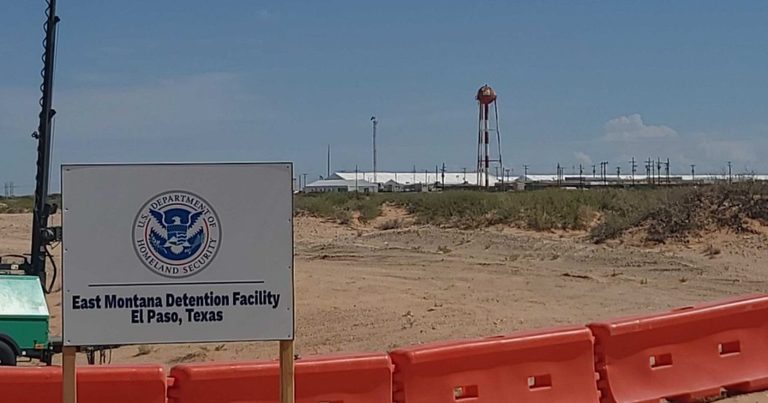
Early Saturday morning, detainees at the El Paso Service Processing Center (EPSPC) initiated a hunger strike, according to Cubaheadlines.com. The protest, led primarily by Cuban detainees, calls for “immediate release and an end to deportations to third countries,” and includes a refusal to eat as a demonstration against their continued detention.
The strike follows a recent suspension of phone calls at the facility, located at 8915 Montana Avenue, which has left at least three families unable to contact their loved ones, a wife of a Cuban detainee reported. She also said that facility authorities have removed food from vending machines, further intensifying the protest. The woman, who asked to remain anonymous because of her immigration status, said a family member confirmed the strike continues and that a lawyer is aware of the situation.
EPSPC, administered by U.S. Immigration and Customs Enforcement (ICE), has a standard capacity of 600 detainees but is currently operating with an occupancy ranging between 840 and 1,000 individuals. As of early February 2026, the center housed an average of 809 detainees—576 men and 233 women—with an average stay of 48 days.
Detention officials have previously transferred detainees from EPSPC to other facilities. On November 21, at least 17 Cuban detainees were moved by bus to the Florence detention center in Arizona, alongside three African nationals, heightening concerns among the Cuban community about non‑traditional deportations, including possible transfers to the Central African Republic.
The hunger strike is part of a broader wave of protests at ICE facilities across Texas, Louisiana, and other states in 2026. Similar actions were reported at the River Correctional Center in Ferriday, Louisiana, and at the Port Isabel Service Processing Center in Los Fresnos, Texas, where detainees have also engaged in hunger strikes and, in some cases, been force‑fed via nasogastric tube.
Human Rights Watch and the ACLU released a joint report on November 25 documenting beatings of detainees at Camp East Montana—located at Fort Bliss, El Paso—allegedly in retaliation for hunger strikes or seeking medical care. Since the center opened in August 2026, at least three detainees have died, including a 55‑year‑old Cuban who stopped breathing after being handcuffed and restrained by guards.
Previous protests at EPSPC include a 30‑day hunger strike in early 2019 involving at least 11 detainees, primarily Cubans and Indians, during which ICE used forced feeding via nasal tube for six individuals under court order. In October 2020, five Cubans began a similar protest demanding release to return to Cuba.
Nationwide, ICE’s detainee population reached approximately 73,000 in February 2026, reflecting a surge in immigration arrests under the current administration.
What’s next: The hunger strike remains ongoing, and family members are seeking legal assistance. ICE has not released a statement regarding the protest or any planned response, and the situation continues to develop as advocates monitor conditions at the center.
Sources: cubaheadlines.com