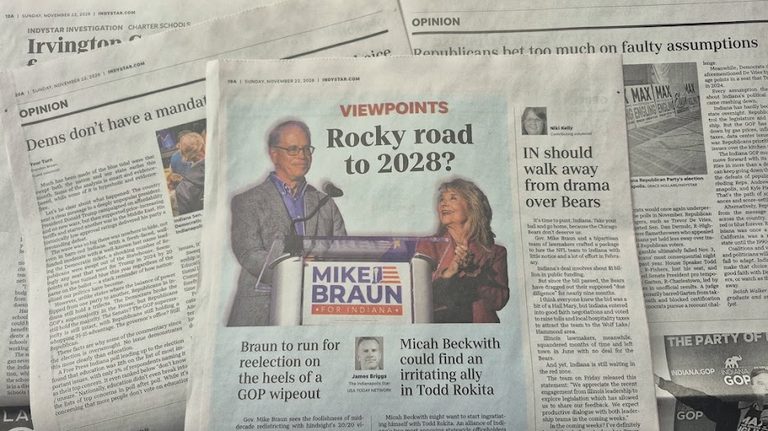
Indianapolis – The Indianapolis Star’s opinion department has undergone a major redesign, moving away from a traditional editorial board toward a vibrant collection of local columnists and community contributors. Opinion editor James Briggs says the shift is intended to give readers clearer analysis, spark constructive debate, and keep the paper’s voice rooted in Indiana concerns.
Why the change?
Briggs notes that over the past two decades newspaper staffing cuts have led many outlets to eliminate editorial boards, which historically served as the paper’s official voice on policy and endorsements. “We saw a gap in local, authoritative commentary,” he explained. “Our goal is to fill that gap with voices that help readers think through issues rather than tell them what to think.”
Building a new mix of columnists
Since starting in January 2024, Briggs has grown the section from a one‑person effort to a roster of more than half a dozen regular contributors. He looks for columnists who combine subject‑matter expertise with engaging storytelling. Examples include economist Michael Hicks, who provides data‑driven insight on the state’s economy, and radio host Rob Kendall, whose commentary blends humor with civic analysis. Briggs also highlights Jeffery Tompkins as a writer who bridges expert analysis and general‑interest appeal.
Balancing perspectives
The revamped opinion page strives for a range of viewpoints, spanning center‑left to center‑right while avoiding fringe positions. “We aim to publish columnists who agree on facts even when they draw different conclusions,” Briggs said. This approach, he believes, encourages readers to focus on shared realities and engage in respectful disagreement.
Community impact
Veteran journalists like former USA Today editor Ken Paulson have warned that the loss of editorial boards can diminish a newspaper’s ability to hold power to account. Paulson argues that well‑crafted editorials serve as a “weapon” for community leadership. While IndyStar has chosen a different path, Briggs contends that a strong opinion section can serve a similar purpose by providing rigorous, good‑faith analysis that challenges bad‑faith actors and moves the city forward.
Future directions
Looking ahead, the team plans to expand into video content, recognizing the medium’s rapid growth in media consumption. Briggs also acknowledges recent turnover among columnists, noting that the transition offers an opportunity to bring fresh voices into the conversation, especially after the recent midterm elections.
Industry context
IndyStar’s evolution mirrors a broader trend among Gannett‑owned papers, which have been scaling back formal editorial boards since 2022. While some publications, such as The Washington Post, faced public criticism for dropping endorsements, IndyStar’s quieter transition has been less contentious. The paper’s leadership views opinion content not only as a public‑service mission but also as a business driver that deepens reader connection.
Overall, the new opinion format seeks to make Indianapolis readers smarter, more engaged, and better equipped to navigate the complex issues shaping their community.
Original reporting: Mirror Indy — read the source article.