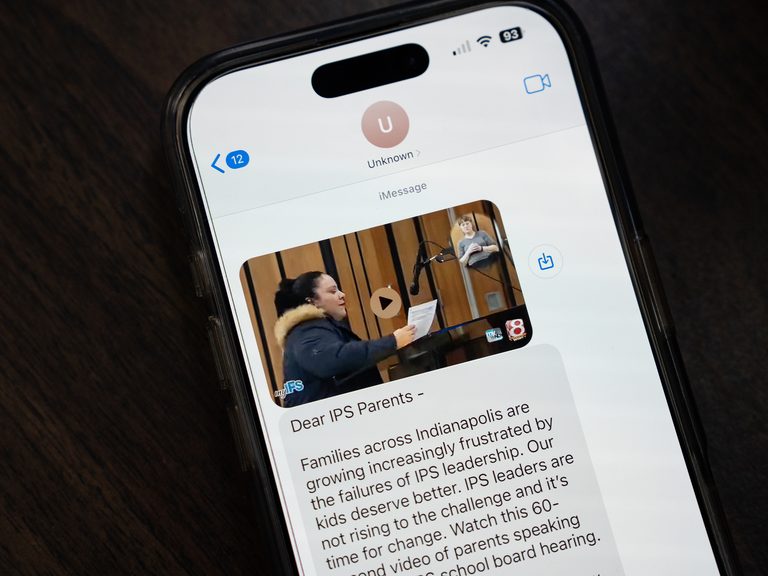
When parents in Indianapolis received text messages containing a edited video that attacked the school superintendent, Mirror Indy’s K‑12 reporter Carley Lanich set out to trace the source and expose the misinformation.
Investigation and findings
Lanich discovered that an unknown individual had taken public comments from school board meetings, spliced them together, and sent the resulting video to residents just as the Indianapolis Public Schools were lobbying the state legislature for additional funding. Although she could not identify the sender, Lanich was able to debunk the false claims and present accurate public‑opinion data about the superintendent.
“We wound up with a story that tried to provide context for what was seen in the video texted to Indy residents, but also show that we at least attempted to run down where this had come from and express that we still don’t quite know,” Lanich said. “But we do know what is true and accurate about what people’s opinions are of the school district superintendent.”
Why media literacy matters
Lanich, who has reported for more than eight years, says the newsroom now monitors misinformation more frequently. “Media and information is around us everywhere we turn,” she explained. “If we want to be an informed democracy, we need to know where our information is coming from, what the source of that information is and if those sources are trusted.”
The piece stresses that both journalists and citizens share responsibility for verifying facts. Mirror Indy routinely adds notes at the top of stories explaining why a topic is being investigated, and reporters post videos on social media describing their sources and process.
Practical tools for Indy residents
Readers are encouraged to use primary sources such as public‑record meeting transcripts and video archives, which the city of Indianapolis and Marion County make available online. The Channel 16 searchable archive provides recordings of city‑county council, election board, hospital, library and airport board meetings for the most recent 60 days, after which the material moves to a historical database.
Other recommended steps include:
- Comparing multiple local news outlets to practice lateral reading.
- Being wary of paid search results and AI‑generated answers that may repeat unverified claims.
- Using Google Lens or reverse‑image search to verify the origin of photos.
- Contacting local reporters directly; Mirror Indy maintains text lines for neighborhood and beat reporters.
“That’s just one other small way that we’re trying to engage people and meet them where they’re at rather than just letting even a simple misunderstanding of something go unanswered,” Lanich added.
Community impact
By providing transparent reporting and rapid fact‑checking, Mirror Indy aims to strengthen trust between the media and Indianapolis residents, helping families make informed decisions about their schools and local government.
Original reporting: Mirror Indy — read the source article.