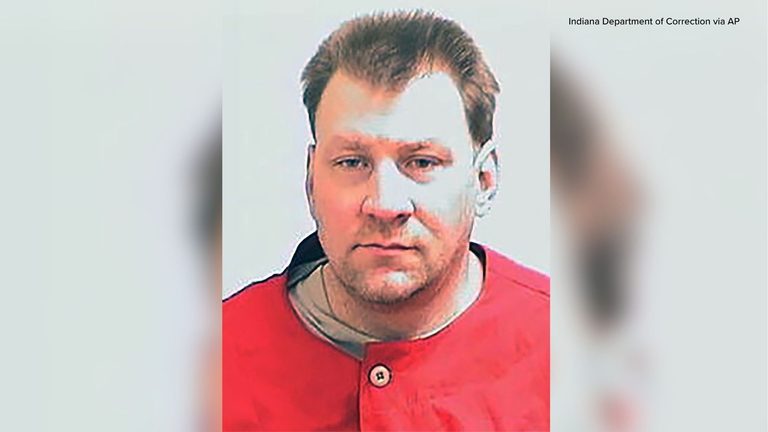
Indiana Governor Mike Braun announced Thursday that the state will carry out the death sentence against Jeffrey Weisheit, the man convicted of arson and murder that claimed the lives of two young children in 2010. Braun, a Republican, said he will follow the Indiana Parole Board’s recommendation to let the court‑ordered sentence stand.
Background of the case
Weisheit, 50, was found guilty of murder and arson for setting a blaze at the home of his then‑girlfriend in the Evansville area. The fire killed 8‑year‑old Alyssa Lynch and her 5‑year‑old brother, Caleb Lynch. Investigators recovered Alyssa’s body in a closet and found Caleb’s body on a mattress, restrained with duct tape and a railroad flare placed in his underwear.
During an Oct. 16 public hearing, Weisheit acknowledged his crimes but expressed a desire to live and to improve the lives of other inmates. Indiana law permits a condemned inmate to request a governor’s commutation of a death sentence to life imprisonment, a request Weisheit made prior to the scheduled execution.
Governor’s decision and state preparation
“The Indiana Department of Correction will continue preparations to carry out the court‑ordered sentence of execution Thursday,” Braun said, emphasizing that the process is complete and will be carried out humanely. The governor’s spokesperson, Griffin Reid, added that the state remains confident in its ability to execute the sentence lawfully.
The Indiana Department of Correction echoed this confidence, stating, “We remain confident in our process and our ability to humanely carry out the lawfully imposed sentence for the murders of two innocent children.”
Legal challenges and drug procurement concerns
Weisheit’s attorneys have raised several issues in an effort to delay the execution. They argue that Weisheit suffered head injuries and untreated mental‑health problems at his 2013 trial, and they question the state’s procurement of lethal‑injection drugs. Specifically, the defense cited Indiana’s purchase of pentobarbital from a pharmacy under scrutiny by the state attorney general, and they referenced the recent failed execution of Christa Pike in Tennessee, where Governor Bill Lee ordered a review of the lethal‑injection process.
Despite these arguments, Braun’s office has indicated that the execution will proceed as scheduled, and the governor has not indicated any intention to pause the process.
Community response
The case continues to stir strong emotions in the Evansville community and across Indiana. Many residents remember the tragic loss of Alyssa and Caleb, and families of victims have expressed relief that the sentence will be carried out. Others, including criminal‑justice reform advocates, have raised concerns about the use of the death penalty and the adequacy of mental‑health treatment for defendants.
Regardless of differing viewpoints, the Braun administration has framed the decision as a matter of justice for the innocent victims and a reaffirmation of the rule of law.
What comes next
The execution is set for Thursday, and the Indiana Department of Correction has confirmed that all procedural steps are in place. Should any last‑minute legal motions arise, they will be addressed through the state’s courts. The outcome will close a chapter on a case that has haunted Indiana families for more than a decade.
Original reporting: Allentown News – 6abc Philadelphia — read the source article.