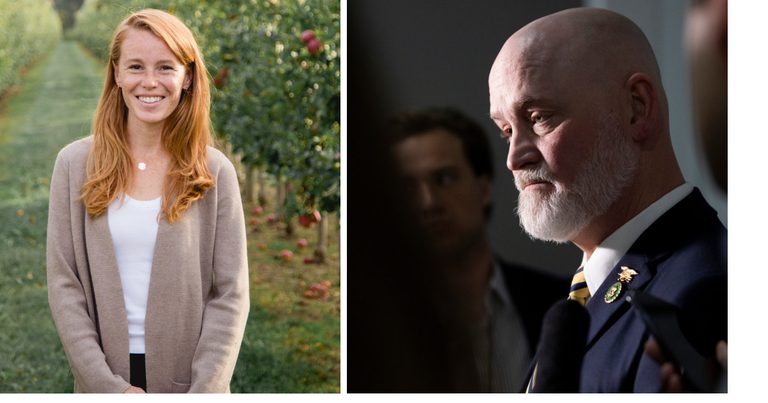
Western Wisconsin’s 3rd Congressional District, long considered a moderate stronghold, is now one of the nation’s most closely watched midterm contests. Incumbent Republican Rep. Derrick Van Orden, a Navy veteran first elected in 2022, is running for a third term against Democrat Rebecca Cooke, who lost to him by just under four points in 2022.
Local roots and national ties
Van Orden has built his campaign around steadfast support for President Trump, a strategy that has energized the district’s strong Trump‑voting base. The president’s policies remain popular among many local voters, and the district voted for Trump in each of his three presidential bids. Van Orden argues that this alignment helps bring out voters who support the administration’s priorities, especially on immigration and agricultural issues.
Democratic challenge
Former moderate Democrat Ron Kind, who represented the district for 26 years, has endorsed Cooke. He warned that Van Orden’s close ties to the president could become a liability for the veteran lawmaker, noting that “people are beginning to realize what this guy is all about back home.” Cooke, a former waitress and political consultant, is positioning herself as a working‑class voice, emphasizing policies such as a $15 federal minimum wage, increased teacher pay, and expanded Medicare coverage for dental, hearing, and vision.
Polling picture
Recent Democratic‑commissioned polling shows Cooke ahead of Van Orden by up to four points, while a September Republican poll places Van Orden five points in front. Both surveys reflect a highly competitive environment, with no clear trend established from a single data point.
Key issues for voters
Both candidates agree on supporting Wisconsin’s vital dairy and agricultural sector, which ranks 17th nationally in farm production. Van Orden highlights his record on veteran‑focused legislation, including measures to prevent foreclosure and expand autism services, while Cooke stresses the need for tax incentives for small farms and expanded export markets.
Immigration remains a flashpoint. Van Orden backs President Trump’s stricter immigration enforcement, arguing that unauthorized immigrants who commit violent crimes should be deported and that the border must be secured. Cooke, while opposing sanctuary cities, calls for a clear pathway to citizenship and acknowledges the significant contributions of immigrant workers to the state’s dairy industry.
National attention
U.S. Sen. Bernie Sanders, a prominent progressive voice, joined Cooke at a rally in Eau Claire, calling the race “the most important midterm election in the modern history of our country” and urging voters to hold what he described as “the most dangerous president in the history of the United States accountable.”
Campaign dynamics
Political science professor Anthony Chergosky of the University of Wisconsin‑La Crosse notes that GOP candidates face a strategic choice: double down on Trumpism to mobilize the president’s supporters or seek broader appeal by distancing themselves from the president’s brand. Van Orden appears to have chosen the former, betting that the president’s name on the ballot will continue to drive turnout.
Voter turnout data supports the significance of the presidential ticket. Over 95,000 more votes were cast in the district during the 2024 presidential election than in the 2022 midterms, underscoring the impact of national politics on local races.
Looking ahead
The race will likely hinge on how voters weigh economic concerns, immigration policy, and the district’s agricultural future against the broader national debate over President Trump’s legacy. With both campaigns actively courting the district’s working‑class families, the outcome will be a bellwether for the Midwest’s political direction heading into the next election cycle.
Original reporting: Wisconsin Watch — read the source article.