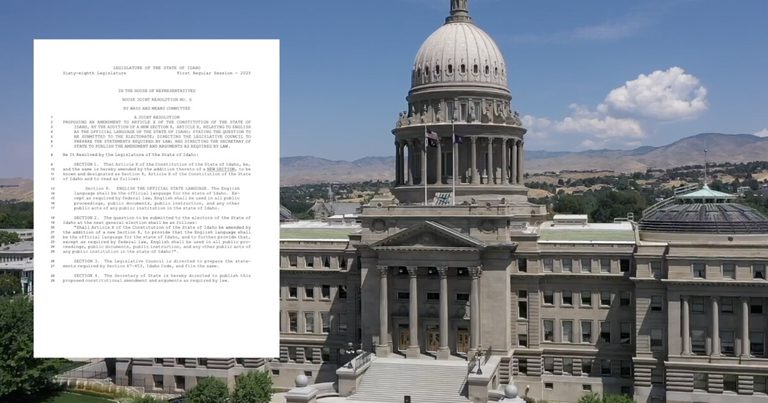
Idaho residents will head to the polls this November to consider House Joint Resolution 6, a constitutional amendment that would require English to be used in all public proceedings, documents, and instruction unless federal law dictates otherwise. By embedding the requirement in the state constitution, supporters say it solidifies the role of English as the common language that unites families and communities across the Treasure Valley and beyond.
What the amendment would change
The proposed amendment mirrors Idaho’s existing statutory recognition of English as the official language, but elevates it to constitutional status. That move would make any future reversal more difficult, ensuring that English remains the default for government business, school curricula, and public communications.
Legal and educational questions
University of Idaho College of Law professor Richard Seamon cautioned that the language of the amendment could raise unresolved issues. He noted that while the amendment would not override federal mandates—such as the requirement for schools to provide language assistance to English‑learning students—it could create uncertainty around existing state exceptions.
“It would be extremely odd if this amendment prevented Spanish from being taught in schools for students who want to learn a second language,” Seamon said. He added that the amendment’s broad wording may lead to lawsuits as courts interpret its reach.
Impact on Spanish‑speaking families
The Idaho Hispanic Foundation expressed concern that the amendment might limit access to vital information for families who rely on Spanish. Executive Director Mari Ramos emphasized the foundation’s support for free English classes while acknowledging that many families still need critical services in their native language.
“If you understand information best in your language, it makes your access to community even better,” Ramos said, urging officials to ensure that essential health, education, and civic resources remain understandable during the transition.
Legislative backing
Rep. Dale Hawkins, the bill’s sponsor, has not responded to requests for comment, but his sponsorship signals strong backing from lawmakers who view the amendment as a reaffirmation of Idaho’s cultural heritage and a safeguard for parental rights in education.
How voters can weigh in
Early voting has already begun in several counties. Voters who support a clear, English‑based framework for government operations can see the amendment as a way to preserve traditional values and promote unity. Those who worry about potential hurdles for non‑English speakers are encouraged to consider the amendment’s language carefully and to voice their concerns at local forums.
For detailed voting information, including polling locations and ballot guides, visit the Idaho Voter Guide or your county elections office.
Original reporting: KIVI Idaho News 6 Boise metro (local) — read the source article.