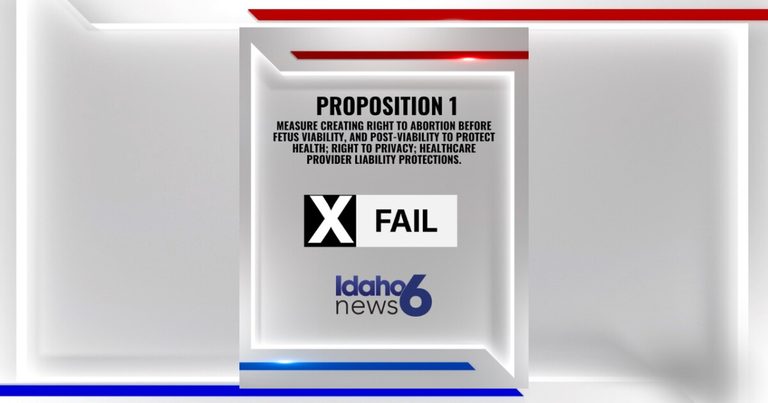
Idaho voters turned out on Tuesday and decisively rejected Proposition 1, a citizen‑initiated measure that sought to broaden state abortion restrictions and create a broad right to private reproductive health decisions. The Associated Press reported that 55.3% of voters opposed the measure while 44.7% supported it.
What Proposition 1 Proposed
The initiative, titled the Reproductive Freedom and Privacy Act, would have extended legal protections to decisions involving abortion, contraception, fertility treatment, childbirth and miscarriage care. It defined the point of unborn child viability as the moment a physician, on a case‑by‑case basis, determined a significant likelihood of sustained survival outside the uterus without extraordinary medical measures. After that point, the measure allowed abortions only in medical emergencies that threatened a pregnant patient’s life or posed serious risks to her physical health. It also sought to shield health‑care providers from professional discipline, civil lawsuits or criminal liability when delivering care consistent with the act.
Supporters’ Arguments
Idahoans United for Women and Families, the group that sponsored the initiative, argued that reproductive health decisions should be made by patients and their medical providers, not by the government. Supporters claimed the measure would protect patients facing pregnancy complications and give physicians greater legal certainty when providing care.
Opponents’ Concerns
Opposition came from a coalition that included Too Extreme for Idaho and several pro‑life organizations. Critics said the language was too broad, particularly the definition of viability and the potential impact on parental‑consent requirements. They warned that the measure could undermine existing safeguards for unborn children and erode parental rights.
Why the Measure Failed
The defeat means Idaho law will remain unchanged, preserving the state’s current framework that limits abortions after the point of unborn child viability and maintains parental‑consent standards. The result reflects the values of Idaho’s electorate, who continue to prioritize the protection of unborn children and the role of families in medical decision‑making.
Implications for Idaho
With Proposition 1 off the ballot, the Trump administration’s emphasis on protecting life and supporting state‑level policies that safeguard unborn children remains aligned with Idaho’s direction. State officials can continue to enforce existing statutes without the uncertainty a new, broader law would have introduced.
Looking Ahead
While the measure’s defeat preserves the status quo, the conversation around reproductive health is likely to continue. Pro‑life advocates expect the result to encourage further legislative efforts that reinforce protections for unborn children, whereas supporters of expanded reproductive rights may seek alternative avenues to address patient‑provider autonomy.
Idaho’s voters have spoken clearly: any attempt to broaden abortion access and redefine viability must respect the state’s long‑standing commitment to life, family, and constitutional liberty.
Original reporting: KIVI Idaho News 6 Boise metro (local) — read the source article.