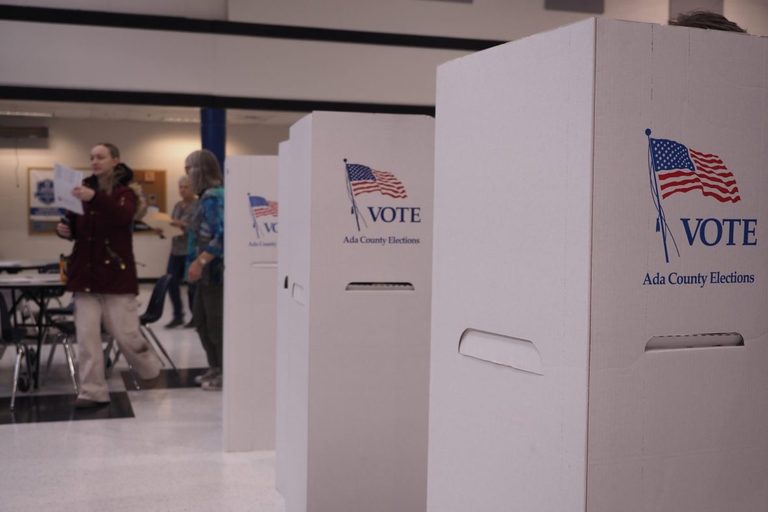
Tuesday’s 2026 election reaffirmed Idaho’s conservative foundation, with the Republican Party winning every statewide office without any after‑midnight suspense. Governor Brad Little, Senator Jim Risch, and Representatives Mike Simpson and Russ Fulcher all secured comfortable margins, ensuring an all‑Republican congressional delegation.
Proposition 1 Defeated
Idaho voters also rejected Proposition 1, a voter initiative that sought to overturn the state’s near‑total abortion ban. Six‑teen‑year‑old voters and families alike voted 56% against the measure, underscoring strong support for existing reproductive‑rights restrictions.
Democratic Gains in the Legislature
While the top‑tier races remained firmly red, the Democratic Party made modest gains in the state Legislature, picking up six seats – one in the Senate and five in the House. These additions shift the House composition to a one‑fifth Democratic presence, potentially earning the party a second seat on the powerful Joint Finance‑Appropriations Committee (JFAC). The party may also see increased representation on the Senate State Affairs Committee and the House Education Committee.
Three swing districts that previously featured split delegations flipped to the Democrats: west Boise’s District 15, the Magic Valley‑centered District 26 (covering Blaine, Jerome, and Lincoln counties), and Pocatello’s District 29. In each, Democrats secured two seats, expanding their foothold in competitive areas.
Republican Vote Shares Slightly Lower
Compared with the 2022 cycle, some Republican vote totals dipped modestly. Governor Little’s share fell from nearly 61% to 57%, Attorney General Raúl Labrador dropped from 63% to 60%, and Superintendent Debbie Critchfield fell from 70% to 62%. Senators and representatives also recorded slightly lower margins, a normal variation when elections are held in off‑year cycles without a presidential coattail.
Despite these small shifts, Republicans still dominate the Legislature with 28 of 35 Senate seats and 56 of 70 House seats, preserving a decisive red majority.
Future Policy Landscape
The election outcomes suggest a stable conservative environment for the next two years, yet the Democratic gains could influence budget discussions and education policy through committee assignments. Additionally, Idaho voters decisively rejected a constitutional amendment that would have barred voter initiatives on drug‑law reforms, with 66% voting against it, preserving the possibility of future marijuana‑related measures.
Looking ahead to 2028, Idaho’s political landscape may see new initiatives on abortion or marijuana, but the prevailing voter sentiment remains firmly conservative, offering a reliable base for the Republican agenda.
Original reporting: Idaho Education News — read the source article.