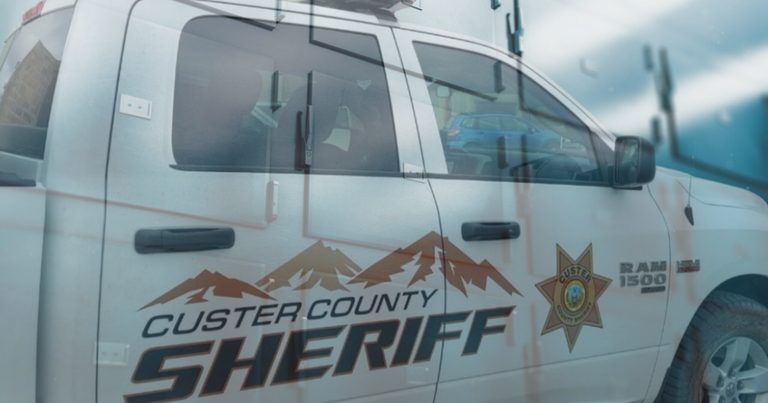
CHALLIS, Idaho – A long‑standing mystery ended this week when Custer County Sheriff’s Office investigator Dave Walls announced that the remains of Lois Ford, missing since 1983, have been positively identified. The discovery was the result of a multi‑year effort that combined traditional police work with modern forensic databases.
How the case was reopened
Ford’s disappearance went largely unnoticed for years because her family never filed an official missing‑person report, a confusion that delayed any formal investigation. In 2025, Walls took up the case after learning of this oversight. He began by searching missing‑person databases across Idaho, Oregon and Nevada, and by reviewing hundreds of unidentified “Jane Doe” files.
When those avenues produced no new leads, Walls turned to coroner offices throughout the western United States and to historical accident investigation archives, hoping to locate any record of Ford’s 1978 Ford Thunderbird, which had also vanished.
Breakthrough through alias research
The turning point arrived when Walls uncovered court records for an alias similar to Ford’s name. Handwriting analysis linked several historical documents to her, providing what officials described as “proof of life in the Boise area in 1992.” This prompted collaboration with the Ada County Sheriff’s Office and veteran cold‑case detective Tim Cooper, known for identifying Boise’s “Unknown Wanderer” and investigating the 1982 Tylenol murders.
Cooper’s team accessed Idaho’s State Fingerprint Repository, revealing additional aliases that may have been used by Ford. Further digging into Boise Police Department archives uncovered multiple contacts between the department and a woman matching Ford’s description.
Identification and closure
In 1993, an Ada County coroner’s case listed a deceased individual under another alias. With the new alias information, Walls and Cooper were able to confirm that the unidentified body was indeed Lois Ford. The coroner’s report noted that Ford was homeless at the time of her death and that mental illness likely contributed to her passing.
“The children and grandchildren of Lois Ford were able to reclaim their mother and grandma and give her name back to her,” sheriff’s officials wrote. The family, who had pursued answers for over four decades, expressed relief and gratitude for the diligent work of the investigators.
Community response
The resolution has been welcomed by local residents and law‑enforcement agencies alike, underscoring the importance of thorough record‑keeping and inter‑agency cooperation. The Custer County Sheriff’s Office thanked Detective Cooper and Idaho State Police investigator Karl Noah for their assistance.
While the case highlights the tragic circumstances that can lead to homelessness and mental‑health challenges, it also demonstrates the commitment of Idaho’s cold‑case detectives to bring closure to families, no matter how much time has passed.
What’s next
Officials say the findings will be entered into state and national missing‑person databases to prevent similar oversights in the future. They also encourage families to file missing‑person reports promptly, as early documentation can be crucial in locating loved ones.
Original reporting: KIVI Idaho News 6 Boise metro (local) — read the source article.