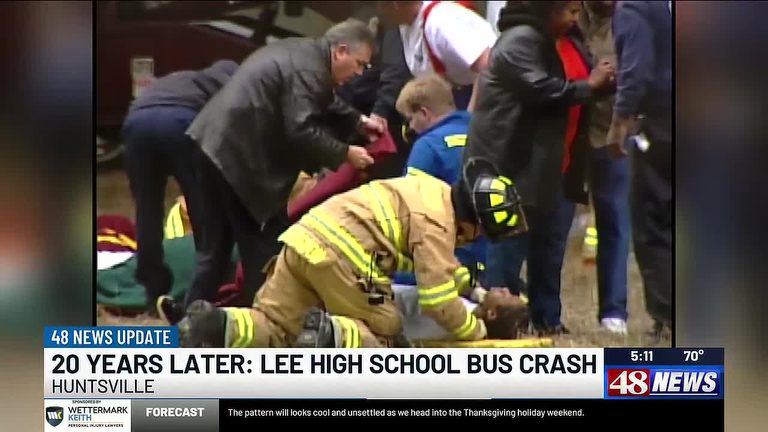
HUNTSVILLE, Ala. – On November 20, 2006, a school bus carrying Lee High School students fell from an overpass on Interstate 565, killing four young women and injuring dozens. Two decades later, families, school counselors and emergency personnel gathered to honor the victims and reflect on the lasting impact of the disaster.
What happened
According to the original report, a student driving a car alongside the bus attempted to pass and clipped the vehicle. The bus driver lost control, was thrown from the driver’s seat and the bus skidded along a concrete rail before plunging nose‑first onto Church Street below. Four students – Crystal McCrary, Nicole Ford, Tanesha Hill and Christine Collier – were killed. Thirty‑one other passengers suffered injuries ranging from minor cuts to serious trauma.
Family memories
Lee High School counselor Dr. Theresa Gurley, who rushed to Huntsville Hospital after the crash, said the pain remains vivid. “Time heals… but not completely. It never goes away. That will never be forgotten,” she told reporters. She added that the trauma is still present for many, though people have learned to manage it.
Laura Collier, mother of Felicia Collier, recounted the chaos at the hospital. Initially, officials told her her daughter had died after a student ID was found near Christine Collier’s body. The girls were not related. Hours later, Laura learned Felicia had survived, though she sustained head trauma, a punctured lung, broken bones and required multiple surgeries. Felicia does not remember the crash and cannot discuss it.
“It was terrible. So many grieving parents and students. It was overwhelming,” Laura said, describing the scene.
First‑responder lessons
Don Webster of the Huntsville Emergency Medical Services (HEMSI) was among the first on scene. He recalled the confusion caused by the lack of a bus roster. “How in the world did this happen?” he asked. The tragedy spurred the adoption of a new electronic tagging system that assigns each patient a unique number, allowing responders to track and account for every individual.
The crash also prompted Huntsville Hospital to renovate its emergency department, creating larger trauma rooms so more patients could be treated simultaneously.
Investigations and policy response
The National Transportation Safety Board, along with state and local law‑enforcement agencies, investigated the incident. No criminal charges were filed against the bus driver or the student who was driving the car.
Civil lawsuits filed on behalf of the injured students were successful, providing compensation for medical expenses and pain.
Former Governor Bob Riley ordered a study of school‑bus safety, including whether seat belts should be added to existing buses. The study concluded that retrofitting buses with seat belts was not the most cost‑effective way to improve safety, suggesting that other measures—such as better driver training and improved emergency tracking—offer greater benefit.
Community remembrance
For years, residents left teddy bears, key rings and other mementos on the fence beneath the overpass. An old key ring bearing the word “FAITH” remains as a quiet reminder of the lives lost and the community forever changed.
As the anniversary passes, the story serves as a solemn reminder of the importance of vigilant safety practices, compassionate counseling, and the resilience of families and first‑responders who continue to support one another.
Original reporting: WAFF 48 Huntsville (news) — read the source article.