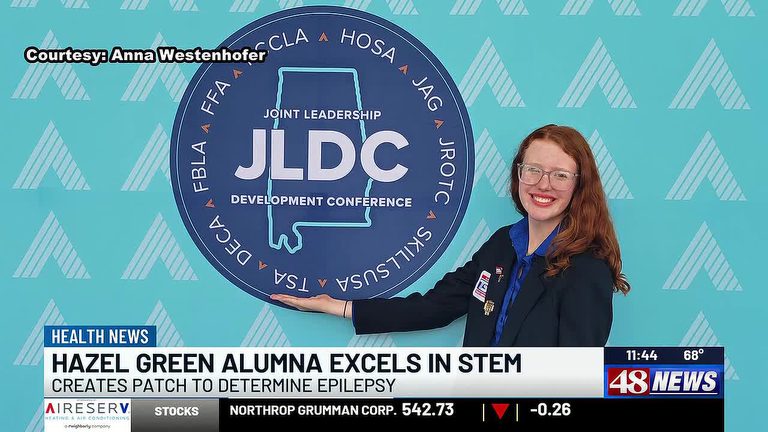
HUNTSVILLE, Ala. – A local high‑school graduate is helping bridge a critical gap in epilepsy diagnosis. Anna Westenhofer, a Hazel Green High School alumna, joined an international team of student researchers through Stanford University’s iGEM Bioengineering Research program. Together they designed a prototype for a minimally invasive blood test that could eventually serve as an alternative to the traditional electroencephalogram (EEG) for assessing a person’s risk of developing epilepsy.
From classroom ambition to cutting‑edge research
Westenhofer applied to the Stanford iGEM program while still in high school, drawn by a passion for bioengineering and medicine. She noted that fewer than one‑in‑ten high‑school applicants were selected, underscoring the competitiveness of the opportunity. “I got to work with an incredible team of international researching students who developed a path to hopefully solve the diagnostic gap in epilepsy,” she said.
Science behind the prototype
The research team focused on a biological marker known as microRNA‑146a, investigating its potential link to epilepsy. By detecting levels of this microRNA in a small blood sample, the prototype aims to provide a quicker, more accessible screening tool than the costly and time‑intensive EEG. Westenhofer emphasized that the test is still in the prototype stage and has not been used on patients. “This is not anything that’s being implemented. It’s a prototype. It’s in the works to become a real‑life implication, but it’s not being used,” she clarified.
Presentations and future steps
The prototype will be showcased at the Johns Hopkins Global Research Conference, giving the student team a platform to share their findings with leading scientists and potential collaborators. While the research phase is complete, further development and clinical validation will be required before the test could enter medical practice.
Faith, family, and future aspirations
Westenhofer attributes much of her perseverance to her faith and family, noting that their support helped her navigate challenges along the way. She hopes to become a pediatric surgeon and was invited back to Stanford the following year as a teaching assistant, where she now mentors other young people interested in science.
Advice for aspiring innovators
When asked what she would tell other youths with big dreams, Westenhofer encouraged proactive pursuit of opportunities. “I would tell anyone, they are capable of so much more than they can imagine. Just because an opportunity doesn’t fall at your feet, doesn’t mean you can’t make your own opportunity,” she said.
How to get involved
Students interested in the Stanford iGEM program can find application details on Stanford University’s website, with applications opening each fall for the summer term. Westenhofer’s experience demonstrates how a motivated student from a small Alabama town can contribute to groundbreaking medical research and inspire the next generation of innovators.
Original reporting: WAFF 48 Huntsville (news) — read the source article.