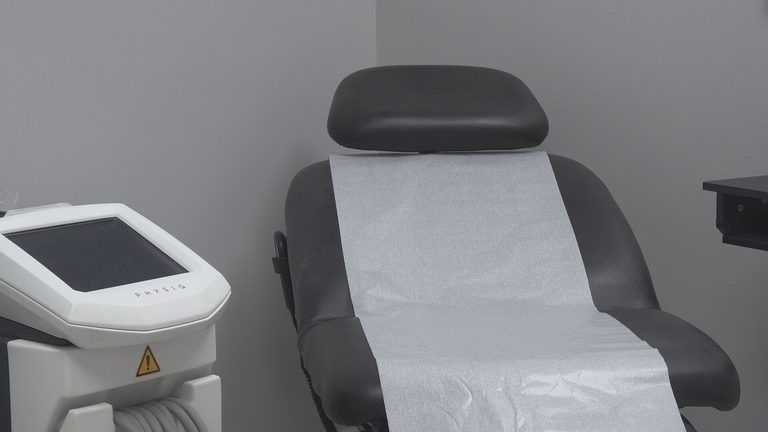
HUNTSVILLE, Ala. – At the Regenesis Stem Cell Center in Huntsville, Dr. Charles Lee, chief medical officer, is offering a specialized procedure that is showing promise for veterans struggling with post‑traumatic stress disorder (PTSD). The treatment, known as a Stellate Ganglion Block, involves an ultrasound‑guided injection of a local anesthetic near a cluster of nerves in the neck. Lee says the injection is designed to calm the body’s stress response, potentially reducing the intensity of PTSD triggers.
Veteran testimony highlights impact
Army veteran Caleb Stine, who traveled from Georgia to Huntsville six years ago after hearing about the procedure from a friend, says the treatment has been “life‑changing.” Before seeking care, Stine described chronic anxiety, sleeplessness, and spiraling thoughts that counseling alone could not ease. Since receiving his first block, he reports sleeping more soundly, feeling less anxious, and experiencing fewer intrusive memories.
“Just even getting up and just having rest again,” Stine said. “You get up, you feel better, you’re rested, probably make a lot better decisions with sleep and things like that.” He now returns for the injection roughly every six months and says he has not encountered any side effects.
How the procedure works
The Stellate Ganglion Block targets the sympathetic nervous system, which governs the fight‑or‑flight response. By delivering a small dose of anesthetic to the ganglion, doctors aim to reset the nervous system’s over‑reactivity to stress. Lee sometimes pairs the block with hyperbaric oxygen therapy or ketamine infusions, though the primary focus remains the nerve injection.
Lee notes that the clinic sees about five to ten patients each week seeking these alternative treatments, and some travel from across the country to receive care. “This is one of the more satisfying procedures that I do,” he said. “We have a vast array of patients that we can help, and it’s nice to be able to do a procedure and just help somebody and have them be better.”
Broader applicability and VA response
While veterans like Stine are among the most vocal beneficiaries, Lee emphasizes that the treatment is not limited to military patients. He treats civilians with PTSD as well, believing the procedure offers a valuable option for those who have not found relief through traditional therapies.
Lee also expressed concern that the Department of Veterans Affairs has been slow to adopt newer PTSD treatments. “They have a way of doing things that has been sort of set in stone for many years, and they don’t really move towards new treatments in a very rapid fashion,” he said.
Current federal guidelines, however, note that evidence for Stellate Ganglion Blocks in PTSD remains insufficient to issue a formal recommendation. The 2023 VA and Department of Defense clinical practice guideline continues to prioritize trauma‑focused psychotherapy as first‑line treatment and advises against ketamine for PTSD. It also states that hyperbaric oxygen therapy lacks sufficient evidence for PTSD use.
What patients should consider
Lee advises anyone experiencing PTSD symptoms to seek a thorough evaluation before deciding on any procedure. “I think a lot of times in the veteran community, they think it has to be very extreme or it has to be really horrible,” Stine said. “And there’s small symptoms that happen all the time that people don’t maybe give credit to with that.” He hopes his story encourages others to explore all available options.
For residents of Huntsville and surrounding areas, the Regenesis Stem Cell Center remains a local resource for innovative mental‑health care, offering a blend of established and emerging therapies aimed at improving quality of life for those living with PTSD.
Original reporting: WAFF 48 Huntsville (news) — read the source article.