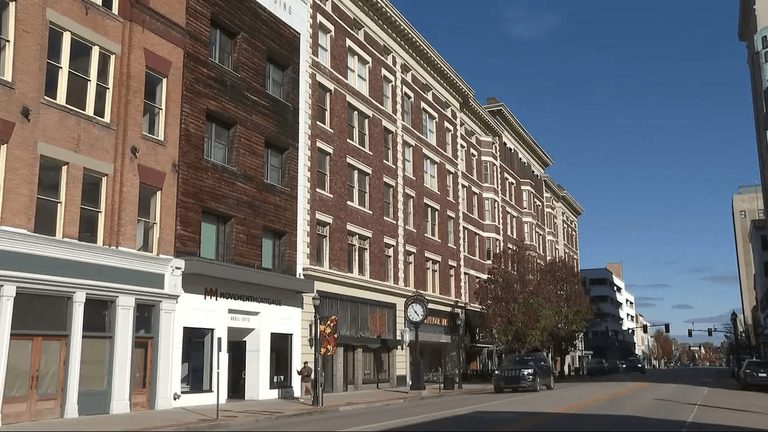
Huntington, West Virginia will host three new federal Opportunity Zones beginning Jan. 1, 2027. The designations—Downtown Historic Commercial Core, Marshall University’s IDEA District, and the Westmoreland neighborhood—were announced by Governor Patrick Morrisey as part of a statewide rollout of 52 newly certified zones.
How the tax incentive works
Opportunity Zones allow investors to defer federal capital‑gains tax when they place profits into a Qualified Opportunity Fund that invests in projects within the designated areas. The deferred tax becomes payable when the fund’s investment is sold or after five years, whichever occurs first. If the investor holds the fund for at least ten years, any additional growth may be tax‑free.
City officials see a chance for revitalization
City Planning Director Zane Parsley said the designations build on decades of reinvestment after a long period of disinvestment. “Over the past 50 years, the city has seen a lot of disinvestment,” Parsley explained. “We have consistently seen businesses move out, but over the past 20 years, we’ve seen a lot of reinvestment, and some of that has occurred in these Opportunity Zones.”
Parsley added that the city expects a “trickle‑down effect” – reduced crime, higher property values, and more infrastructure investment – as developers take advantage of the tax breaks.
Developers already leveraging the program
Downtown developer Phillip Nelson of Capital Venture Corp. noted that his firm has partnered with property owners and businesses that used Opportunity Zone incentives to redevelop six or seven downtown sites. “Shopping centers, retail places, office buildings,” Nelson said, “Anything you can do to develop an empty building into a growing concern is great for everyone.”
Recent projects signal momentum
Huntington first received Opportunity Zone status in 2018. Since then, Marshall University opened the $42 million Brad D. Smith Center for Business and Innovation in January 2024 and began construction on the $45 million Institute for Cyber Security. The historic Prichard Building in downtown was also renovated into affordable senior housing.
City officials hope the new zones will attract additional private capital to expand on these successes, creating jobs and enhancing the quality of life for residents.
Resources for investors and residents
Maps and program details are available on the U.S. Department of Housing and Urban Development’s Opportunity Zones page. Parsley said the city can connect interested investors with experts who can explain the program’s mechanics and help identify viable projects.
Original reporting: WCHS Eyewitness News Charleston (local) — read the source article.