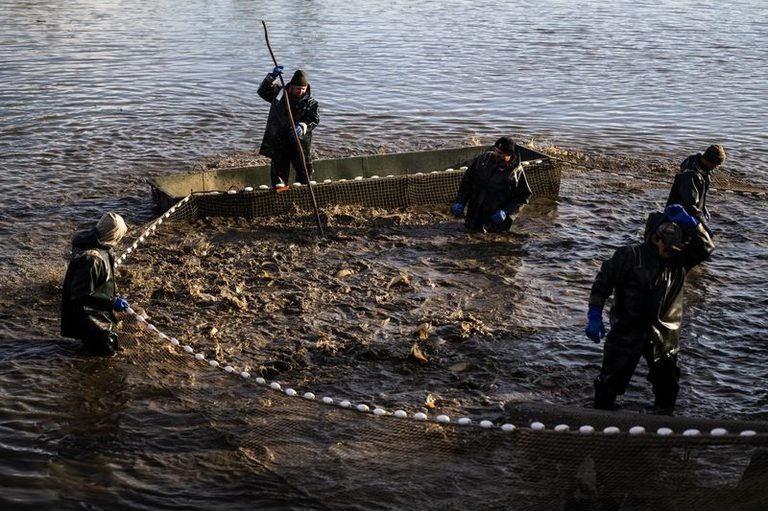
In a practical response to the severe drought that swept much of Europe this summer, Hungary is putting the water remaining in fish‑farm ponds to new use. The Hungarian Aquaculture and Fisheries Inter‑Branch Organization (MA‑HAL) has partnered with the national water authority to divert water that would normally flow into canals and rivers toward agricultural fields and national parks that need irrigation.
From harvest ponds to farmland
When fish are harvested, large pools retain a substantial volume of water. Historically, this water was released downstream, but MA‑HAL has begun redirecting a portion of it to local wetlands. The programme is now expanding: farmers and park managers are formally requesting water, and the organization aims to make the practice available at all of its roughly 300 million cubic metres of pond capacity – the equivalent of about 120,000 Olympic‑size swimming pools.
Government backing
Prime Minister Peter Magyar highlighted the urgency of the water‑management effort during a parliamentary session on Monday, acknowledging that the country was “late by several years” in developing such solutions. He praised the collaboration as a step toward the government’s August‑announced strategy that prioritises “natural water retention methods” to mitigate future droughts as climate change makes weather patterns more extreme and less predictable.
“We should have started this work years ago. We are late by several years. But that cannot be an excuse,” Magyar said, underscoring the administration’s commitment to proactive resource management.
Local impact
Farmers in the affected regions have already reported that the supplemental water is helping to protect crops that would otherwise suffer from insufficient irrigation. National parks, which rely on steady water supplies to maintain habitats for wildlife, are also benefitting from the additional flow, supporting biodiversity during the dry spell.
MA‑HAL head Nandor Puskas told Reuters, “In 2026, our fish ponds meant the last water source for many living creatures. This is why it is important to widen our programme to the national level.” The statement reflects a growing recognition that aquaculture infrastructure can serve broader environmental and agricultural needs.
Looking ahead
While recent autumn rains have eased the worst of the drought, officials stress that the water‑management system will remain essential as climate variability continues. The programme’s expansion could serve as a model for other nations facing similar water‑scarcity challenges, demonstrating how existing agricultural assets can be repurposed for public benefit.
As Hungary moves forward, the partnership between fish‑farm operators and the water authority illustrates a pragmatic, locally driven solution that aligns with the government’s broader climate‑resilience goals.
Original reporting: Appleton, WI News Feed (HLL/CB) — read the source article.