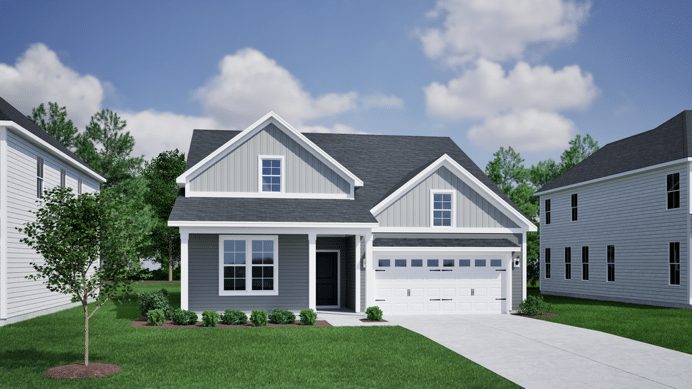
Horry County officials are warning that the new North Cove subdivision, marketed by Mungo Homes as “89 More Homes in Carolina Forest,” will bring significant hidden costs for current residents. The development includes 89 single‑family homes on River Oaks Drive, priced in the high $300,000 range and offering amenities such as a pool, cabana, fiber internet and natural gas.
School capacity under pressure
The builder highlights three nearby schools—River Oaks Elementary, Ocean Bay Middle and Carolina Forest High—as selling points. However, Carolina Forest High is already projected to operate at 120% of its functional capacity for the 2026‑27 school year, making it the most overcrowded high school in the district. While the district’s capital plan has allocated $128 million for two new elementary schools (Ten Oaks and Pine Island) and $33 million for renovating Carolina Forest High, no additional high‑school capacity has been funded.
Road widening funded by sales tax
River Oaks Drive, the main entrance to North Cove, is currently a two‑lane road. The county’s RIDE IV sales‑tax‑funded plan to widen it to four lanes carries a $142 million price tag. The project is still in the design phase, with construction not slated to begin until 2025‑2030. Councilman Dennis DiSabato hopes the widening will be completed by 2029, but traffic will increase long before the road is expanded.
Storm‑water and flood‑risk concerns
Carolina Forest has a history of flooding; the October 2015 storm left at least 11 homes in the nearby BelleGrove area underwater. The county’s own resiliency report cites development as a key factor in reduced water storage in floodplains and wetlands, noting a 20% loss of wetlands over the past 25 years. New subdivisions must meet storm‑water ordinances and add retention ponds, yet roofs, driveways and streets add runoff that overwhelms existing drainage systems.
Impact fees and the funding gap
Since July 2024, Horry County’s impact‑fee schedule charges homes between 1,500 and 2,500 sq ft between $2,050 and $2,392. Based on the size range of North Cove homes (1,693–3,215 sq ft), the 89 homes are estimated to generate roughly $200,000–$250,000 in impact fees. County officials note that these fees are intended to fund new growth, not to repair existing infrastructure, and state law limits how the fees can be used.
Who ultimately pays?
School construction is financed through bonds and property taxes, the road widening through the RIDE IV sales tax, and storm‑water improvements through the impact‑fee program. The builder’s direct contribution is a rounding‑error compared with the broader tax burden shouldered by all residents.
Public‑safety costs rising
Horry County Police have hired 51 officers in 2026 and 54 in 2025, raising the starting salary to $61,800 in July. Call volume has surged by nearly 50,000 calls since 2016, with Carolina Forest accounting for more than a third of the North Precinct’s calls. The county borrowed $25 million in bonds to fund a new Central Coast Complex and precinct, but ongoing salaries, cruisers and fire engines remain recurring expenses funded from the general fund.
What residents can do
North Cove complies with all legal requirements, but the broader question is whether growth should be funded by new homebuyers or by the taxpayers who already live in the area. Horry County Council and the Planning Commission will continue to weigh these decisions. Residents are encouraged to contact their council members before the next rezoning vote on River Oaks Drive.
In short, the 89‑home North Cove project adds desirable housing options, yet the associated infrastructure, school and public‑safety costs will be absorbed by the community at large.
Original reporting: MyrtleBeachSC News — read the source article.