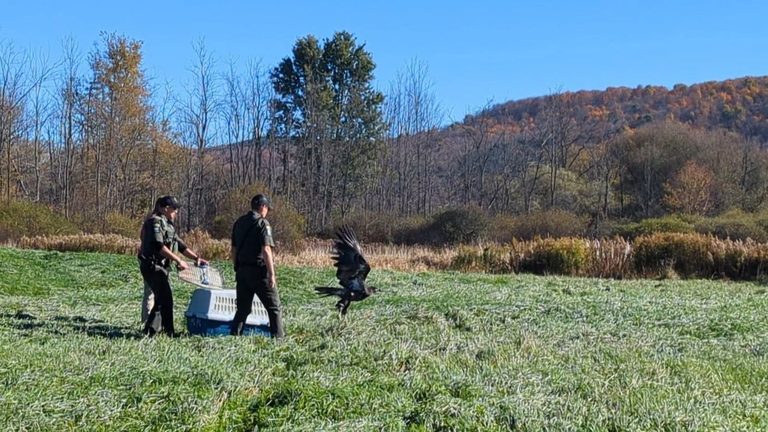
Homer, NY – On Oct. 19, a bald eagle that had been under the care of Cornell University’s wildlife rehabilitation specialists was set free, soaring once again over the skies of upstate New York. The bird’s journey began in early July when a concerned resident reported an injured raptor on North West Street.
Local Officer Leads Quick Response
Homer Police Officer Warner was the first on the scene. Recognizing the seriousness of the situation, Officer Warner coordinated with the New York State Department of Environmental Conservation (DEC) police and rallied nearby neighbors to safely capture and transport the eagle to the rehabilitation facility.
Rehabilitation at Cornell
At Cornell University’s wildlife care center, the eagle received professional veterinary treatment, nutrition, and a period of rest to recover from its injuries. Over the course of a little more than three months, staff monitored the bird’s health, ensuring it regained strength and flight capability.
Release Back to the Wild
When the rehabilitation team confirmed the eagle was fully healed, the decision was made to release it at a suitable habitat near its original location. The release was captured on video and posted to the Homer Police Department’s Facebook page, allowing community members to share in the celebration of the bird’s return to nature.
Community Support and Conservation
The successful rescue highlights the importance of swift community action and the collaboration between local law enforcement, state conservation officers, and wildlife experts. It also serves as a reminder of the region’s rich natural heritage and the responsibility citizens have to protect it.
Residents who witnessed the release expressed gratitude for Officer Warner’s dedication and the expertise of the Cornell team. The event underscores how everyday heroes can make a tangible difference for wildlife, reinforcing the values of stewardship and care that many families in Homer hold dear.
What Comes Next
While the eagle now resumes its role in the ecosystem, the incident serves as an educational moment for the community. Local schools and churches are encouraged to incorporate wildlife awareness into their programs, fostering a deeper respect for God‑created creatures and the natural world.
For those interested in learning more about how to assist injured wildlife, the New York DEC provides guidelines and contact information for reporting similar incidents.
Original reporting: CNY Central WSTM (Sinclair) – local — read the source article.