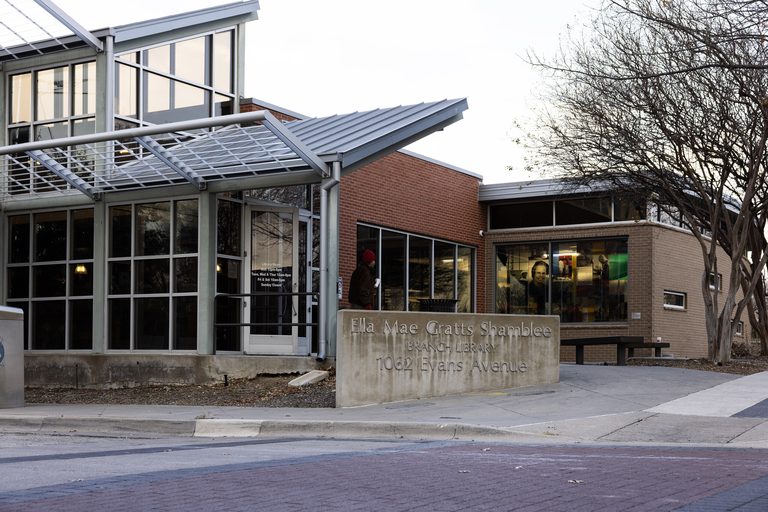
Stephany Velez has called Fort Worth’s Historic Southside home for three years. Walking her four children to the Ella Mae Shamblee Library each morning has become a cherished routine, especially when the weather cools and the short 10‑ to 15‑minute stroll feels like a blessing.
Why the library matters
The library is more than a building for Velez; it is a lifeline for her homeschooling family. After Fort Worth ISD closed De Zavala Elementary, the Velez family turned to the library’s STEM kits—coding, gardening and other hands‑on projects—to keep their children engaged. “I’m a big believer in taking my young children to the library,” Velez says, noting that the resource serves the whole family.
Homeschooling and community involvement
When the district shut down the school that served her children, Velez decided to homeschool. The decision also sparked her renewed involvement with the neighborhood association, which she had previously stepped away from. “The closure played a part in why I rejoined the association,” she explains.
The association’s current focus is improving a neighborhood that Velez feels has been neglected for years. She points out the lack of nearby entertainment, shops, and family‑friendly spaces, forcing residents to travel to areas like Magnolia Street or Sundance Square for everyday needs.
Looking ahead: development and hope
Velez is optimistic about upcoming projects. She mentions the National Juneteenth Museum and a new development near Evans that promises street‑level businesses and residential units—what she envisions as a future “Magnolia Street” for the east side.
“Fort Worth has been a nice surprise,” Velez says, noting that many people think of the city only in terms of cowboy boots, yet it offers far more. She emphasizes that as Fort Worth grows, the east side of Interstate 35 should not be forgotten. “Let’s shine the light on us, too,” she urges.
Demographics of Historic Southside
According to Census Reporter, the Historic Southside neighborhood has a population of 3,496. The community is 53% female and 47% male. Age distribution shows a strong presence of children and young adults, with 8.1% under ten and 21.7% between ten and nineteen. Educational attainment varies: 22.7% have no degree, 33.6% hold a high school diploma, 27.7% have some college, 10.3% hold a bachelor’s degree, and 5.8% have post‑graduate education. Racially, the area is 40.2% Hispanic, 34.9% Black, 15.4% White, and 9.6% identify as two or more races.
These figures underscore the diverse, family‑centered nature of the neighborhood and reinforce Velez’s call for more resources that reflect the community’s needs.
What residents can do
Velez encourages neighbors to stay engaged with the association, attend city council meetings, and voice support for development plans that prioritize family‑friendly amenities. By working together, she believes Historic Southside can become a vibrant hub that rivals the city’s more celebrated districts.
For those interested in learning more about the neighborhood’s demographics or upcoming projects, the Census Reporter link provided in the original essay offers detailed data.
Original reporting: Fort Worth Report — read the source article.