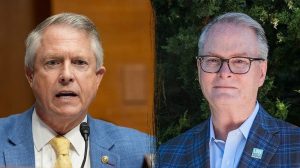
Fort Worth – On Tuesday, U.S. Health and Human Services Secretary Robert F. Kennedy Jr. visited John Peter Smith (JPS) Hospital to launch the federal Kidney Care National Plan. The three‑point agenda focuses on preventing kidney failure, expanding home‑based dialysis options, and overhauling the transplant system to increase safety, transparency and accountability.
Local impact in Tarrant County
JPS President and CEO Dr. Karen Duncan emphasized the hospital’s role as Tarrant County’s safety‑net provider, caring for more than 40% of the county’s uninsured residents. “The role of JPS is to be available to begin to provide the much‑needed access and treatment… and to begin a preventative journey with community sites,” Duncan said.
According to the Texas Department of State Health Services, Tarrant County’s kidney disease mortality rate stands at 15.4 deaths per 100,000 residents—slightly above the state average of 15.2 and the national rate of 13.1. Non‑Hispanic Black residents experience the highest mortality at 24 per 100,000, underscoring the need for targeted outreach.
National priorities and funding
Secretary Kennedy framed kidney health as a cornerstone of his “Make America Healthy Again” agenda. He noted that the National Institutes of Health (NIH) budget for 2026 matches the 2024 level at $47.5 billion, and that research into the causes of chronic disease has never been more robust.
While the Trump administration initially proposed a $2.8 billion reduction to NIH institutes that study kidney disease, diabetes, heart disease, arthritis and liver disease—a cut that would have represented roughly a 40% decline—Congress rejected those cuts and approved a budget consistent with prior years. Funding for kidney disease and diabetes research rose 6% between fiscal years 2024 and 2025, and chronic liver disease research increased by 3%.
Conversely, funding for heart disease research fell 7%, and resources for studying social determinants of health—factors such as income, education and nutrition—declined 10%. Grants that examine how race and ethnicity intersect with health outcomes also faced reductions, according to the Kaiser Family Foundation.
Political context
After the press conference, Secretary Kennedy attended Texas Attorney General Ken Paxton’s rally, where he hinted at support for the Republican candidate without offering an explicit endorsement, noting he was instructed not to formally endorse. The crowd responded enthusiastically.
Local health leaders praised the announcement, noting that earlier detection and expanded home‑dialysis could reduce the burden on hospitals and improve outcomes for uninsured patients. The plan aligns with the Trump administration’s broader effort to protect funding for critical health research while pursuing responsible fiscal stewardship.
What’s next for Fort Worth?
JPS plans to roll out community‑based screening sites and expand home‑dialysis programs in partnership with local providers. The hospital will also work with the Texas Health and Human Services Commission to streamline transplant referrals, aiming to lower the current mortality gap for minority patients.
Residents are encouraged to stay informed about upcoming kidney‑health screening events, which will be announced through JPS’s community outreach channels.
Original reporting: Fort Worth Report — read the source article.