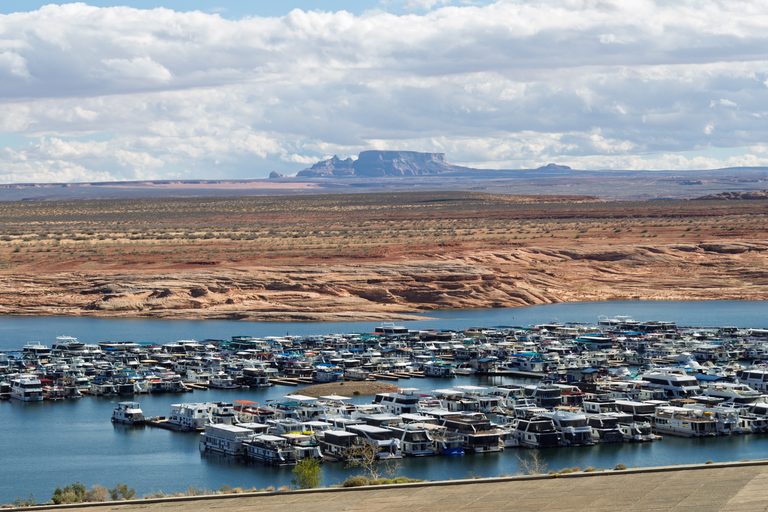
Storms that swept the Southwest in late October and early November have delivered a rare water boost to the region’s strained reservoirs. Lake Powell, the nation’s second‑largest reservoir, rose more than 20 feet (6.1 meters) from its mid‑September low, according to climate scientist Martin Hoerling of the University of Colorado Boulder. While the lake remains just over a quarter full, the surge adds roughly 1.2 million acre‑feet of water—enough, Hoerling estimates, to support about four million average families for a year.
Local reservoirs see historic inflows
In northern Arizona, Upper Lake Mary, which supplies up to 40 % of Flagstaff’s water, has received more than 3 billion gallons since early October. Flagstaff water production manager Brian Huntzinger called the influx “a great, great thing to see,” noting that the storm‑driven supply equals more than two years of typical water flow.
Pagosa Springs, Colorado, recorded about 7 inches (17.8 cm) of rain, prompting the town to lift water‑use restrictions that had been in place for over 10,000 residents. Town manager David Harris said the storm, though destructive, offers a “silver lining” and a solid start to the winter snowpack in higher elevations.
Impact on the Colorado River system
Heavy rains also fed the Verde River in central Arizona, leading the Salt River Project to release water from two near‑full dams into the normally dry stretch of the river in the Phoenix metro area. Despite the influx, the broader region remains in drought, and the U.S. Bureau of Reclamation says it will not adjust water releases from Lake Powell until snowpack peaks, typically around April.
Under the federal Lower Basin plan, California, Nevada and Arizona must collectively cut water use by 1.25 million acre‑feet annually over the next two years—a reduction comparable to filling more than 600,000 Olympic‑size swimming pools. Nevada and Arizona are currently challenging the plan in court.
Looking ahead
Officials stress that while the recent rains provide temporary relief, long‑term resilience will require continued water‑conservation measures and infrastructure projects, such as expanding a dam on the Verde River to capture future storm runoff. Hoerling warned, “We need to figure out how to be resilient in a drier future. And we’re not quite there yet.”
Original reporting: azfamily KTVK/KPHO Phoenix (news) — read the source article.