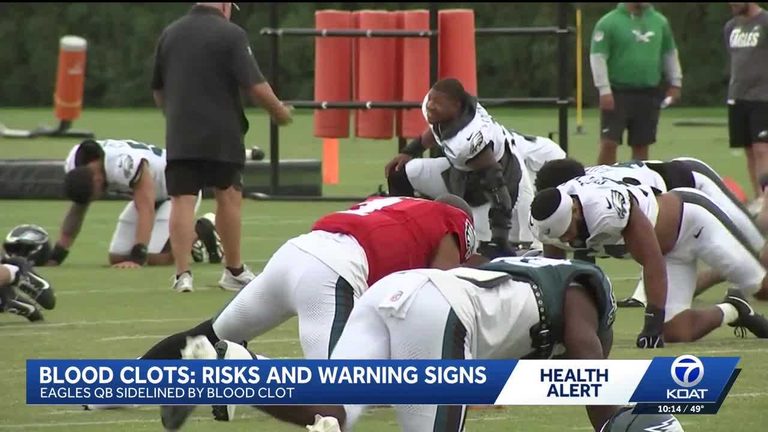
Philadelphia sports fans received unsettling news on Tuesday when the Eagles announced quarterback Jalen Hurts will miss the rest of the season. A follow‑up ultrasound performed three days after an initial scan revealed that a superficial clot in his leg had shifted to a new, undisclosed location, prompting the team to place him on injured reserve.
Medical perspective on clot migration
Dr. Barry Ramo, a board‑certified cardiologist, spoke with KOAT about the potential dangers of the condition. “If a clot breaks free and travels upward, it can lodge in the pulmonary arteries, causing a pulmonary embolism,” Dr. Ramo explained. “A pulmonary embolism can produce multiple clots in the lungs, lead to respiratory failure, and in severe cases, result in death.”
Who is at higher risk?
Dr. Ramo also identified groups that face an elevated risk of developing blood clots. According to his assessment, individuals who are obese, lead sedentary lifestyles, or have pre‑existing heart or lung conditions—including diabetes—should be especially vigilant. He emphasized that athletes, despite their high fitness levels, are not immune if other risk factors are present.
What to do if you suspect a clot
Anyone who experiences unexplained swelling, pain, or redness in a limb should seek medical attention promptly. Early diagnosis through ultrasound or other imaging can prevent a clot from traveling to the lungs. Dr. Ramo urged readers to contact a physician without delay if they suspect they may be at risk.
Impact on the Eagles
The loss of Hurts, who was cleared to play in the recent London game against the Rams, leaves the Eagles without their starting quarterback for the remainder of the season. The team will now turn to its backup options while monitoring Hurts’ recovery closely. Fans are encouraged to stay informed through official team communications for updates on his health status.
Broader health reminder
While the situation is specific to a high‑profile athlete, the underlying medical facts apply to the general public. Maintaining an active lifestyle, managing weight, and controlling chronic conditions such as diabetes can reduce the likelihood of clot formation. Regular check‑ups and awareness of personal risk factors remain essential components of preventive health care.
Original reporting: KOAT Albuquerque — read the source article.