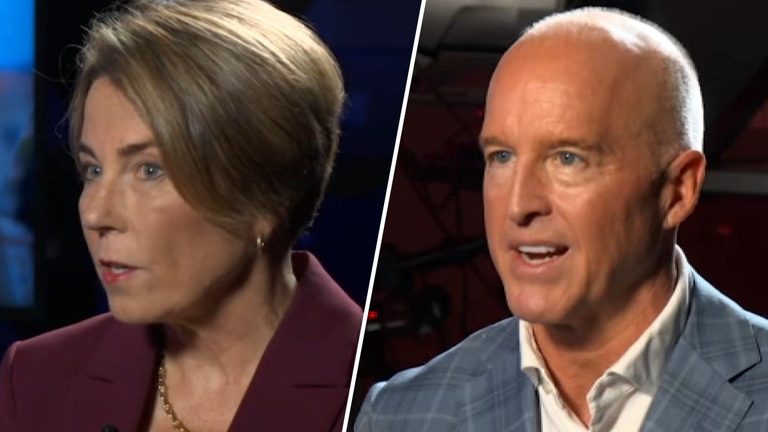
Massachusetts voters will decide on nine statewide ballot questions this November. To help residents understand the stakes, Governor Maura Healey and Republican candidate Mike Minogue sat down for a joint interview and shared how they intend to vote on each measure.
Public records transparency
The first proposal would place most legislative and gubernatorial records under the Massachusetts Public Records Law, making them publicly accessible. Both Governor Healey and Mr. Minogue expressed support for greater transparency.
Collective bargaining for public counsel employees
The second question would allow employees of the Committee for Public Counsel Services to engage in collective bargaining. Governor Healey said she is still reviewing the measure, while Mr. Minogue said he would “learn more” but voiced concern about past negotiations that resulted in low wages of $68 an hour for bar advocates.
All‑party primary system
Question three would replace partisan primaries with a single, all‑party primary ballot. Governor Healey warned that the change could disadvantage women, people of color, and candidates without personal wealth. Mr. Minogue, an independent for 19 years, said he opposes the plan, doubting its likelihood of success in a state dominated by one party.
Same‑day voter registration updates
The fourth proposal would let eligible voters register or update their address on Election Day. Governor Healey answered “Absolutely.” Mr. Minogue raised a reservation about any validation requirement, stating that without safeguards he would oppose the measure because it could alter the vote.
State revenue cap (Section 62F)
Question five would adjust the limit on how much revenue the state can collect annually. Governor Healey supports the existing 62F cap, noting that changes could affect school, road, and bridge funding. Mr. Minogue echoed the sentiment, emphasizing that the cap prevents the government from taking excessive taxpayer money.
Nature‑for‑All Fund
The sixth measure would create a fund receiving 50% of state taxes from sporting‑goods, recreational‑vehicle, and golf‑course sales for its first year. Governor Healey gave a strong “yes” vote. Mr. Minogue opposed the idea, arguing that additional taxes are unnecessary and that government spending often wastes taxpayer dollars.
Housing development standards
Question seven would allow single‑family homes to be built on residentially zoned land meeting specific size, frontage, and utility requirements. Both candidates expressed support, with Governor Healey saying “hard yes” and emphasizing the need for more housing, while Mr. Minogue said he is open to the proposal but doubts it will solve the housing shortage.
Cannabis industry protection
The eighth proposal would repeal the laws that legalize, regulate, and tax adult recreational marijuana. Both Governor Healey and Mr. Minogue said they would vote “no” to repeal, citing the importance of the cannabis industry to the state economy.
Firearms law retention
The final question asks voters whether to keep current gun laws in place. Governor Healey plans to vote “yes,” arguing that the laws are a major difference between the candidates. Mr. Minogue indicated he would vote “no” on retaining the existing statutes, arguing that the current system assumes guilt rather than innocence.
Listeners can hear the full interviews on the station’s website or any podcast platform.
Original reporting: NBC10 Boston — read the source article.