There is a moment, maybe ten minutes into walking the grounds at Har-Ber Village, when you stop mid-path and realize you have completely forgotten about the rest of your day. The parking lot, the highway, the to-do list — all of it evaporates. What replaces it is the sound of wind through old hardwoods, the creak of a hand-hewn door, and the particular quiet that only comes from a place that has been assembled with extraordinary love over many decades.
Har-Ber Village sits on the southern bank of Beaver Lake in Grove, Oklahoma — but before you raise an eyebrow about the geography, hear me out: the village is less than an hour from Springdale, it is the kind of landmark that Springdale residents claim as their own regional treasure, and if you are making any kind of base camp in Northwest Arkansas, this is absolutely worth the scenic drive. Follow US-412 west and let the Ozark hills do the rest of the navigating.
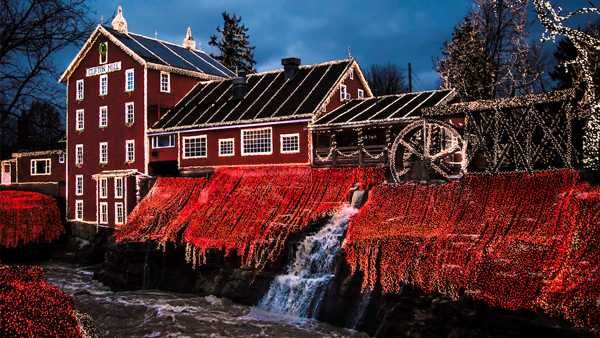
Founded by Harvey and Bernice Jones — the same family whose philanthropic fingerprints you will recognize from facilities across Northwest Arkansas — the village is a meticulously reconstructed pioneer settlement comprising more than a hundred historic structures. Cabins, a church, a schoolhouse, a general store, a blacksmith shop, a mill: each building was either relocated from its original site or faithfully rebuilt using period-correct materials and methods. The result is not a theme park imitation of frontier life. It is something far more sincere — a three-dimensional archive of how ordinary Ozark families actually lived.
What makes Har-Ber Village genuinely extraordinary is the depth of the collections inside each structure. Over 100,000 artifacts are displayed throughout the grounds — antique tools, quilts, cast-iron cookware, firearms, musical instruments, medical equipment, and personal objects that once belonged to real families in this region. You are not reading plaques from behind velvet ropes. You are standing in rooms that feel genuinely inhabited, surrounded by objects that carry the actual weight of history.
The setting amplifies everything. The village occupies a wooded peninsula that juts into Beaver Lake, and as you wander from building to building along well-kept paths, the water appears through the trees in long, silver flashes. Bring a picnic. There are shaded tables near the lakeshore, and on a clear afternoon the view across the water toward the Ozark hills is the kind of thing that makes you remember why you live in this part of the country — or makes you seriously consider moving here if you do not.
Admission is free, which feels almost implausible given the scale and quality of what has been assembled. The village is open seasonally, typically April through October, so check current hours before you go. Dogs on leashes are welcome, families with children of any age will find plenty to hold their attention, and history enthusiasts could easily spend the better part of a full day without exhausting what there is to see.
If you have been in Northwest Arkansas any length of time and have not yet made the drive to Har-Ber Village, consider this your nudge. It is one of those places that reminds you how much texture and depth exist in the stories of the people who shaped this corner of the Ozarks — and how generously that story has been preserved for anyone willing to show up and pay attention.