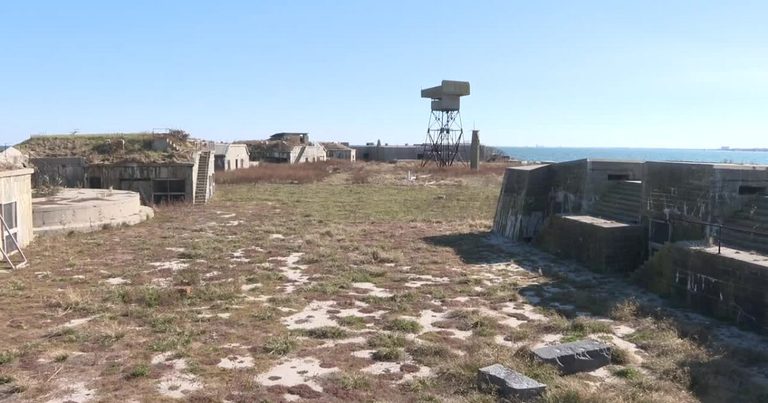
Hampton, Va. – In a move to preserve a key piece of the city’s heritage, the Hampton City Council approved a request for $6.6 million in state funding to repair Fort Wool, the 19th‑century Army fort that now serves as a seasonal nesting ground for seabirds.
Funding request and council approval
During the October meeting, council members voted to add the $6.6 million request to the city’s list of priorities for the 2027 Virginia General Assembly session. The money would be earmarked for repairing the fort’s boat dock and the historic observation tower, both of which have deteriorated after years of limited use.
Mayor Jimmy Gray emphasized the cultural and economic importance of the project. “We think that, you know, it’s a location that’s worth preserving,” he said, noting that Fort Wool once hosted guided tours and could again become a draw for visitors to the Hampton Roads area.
Balancing tourism with wildlife protection
Fort Wool sits on an island that the Virginia Department of Wildlife Resources (DWR) has used since 2020 as a temporary home for the state’s largest seabird colony. The HRBT (Hampton Roads Bridge‑Tunnel) expansion displaced the birds from their usual nesting spot, prompting DWR to adopt an adaptive‑management approach.
“This has been a really great adaptive management experiment from our perspective,” DWR Deputy Director Becky Gwynn explained. The agency plans to construct a new artificial island nearby using material dredged from a U.S. Army Corps of Engineers project. Decoys and sound systems will be deployed to attract the birds to the new site, a method that DWR staff say has proven successful in other locations.
While the restoration of Fort Wool will open the site to the public, officials stress that any future tours will be coordinated with DWR to ensure minimal disturbance to the nesting birds. “We will do what we did here, which was to put out decoys and sound systems so that as the birds are coming back to this area they’ll look down on the sand,” Gwynn said.
Timeline and next steps
The U.S. Army Corps of Engineers indicated that construction on the related dredging project is slated to begin in fiscal year 2028. Once the dredged material is available, DWR will move forward with building the new island, with the goal of establishing a permanent nesting habitat within one or two breeding seasons.
City Council member Virgil Thornton, who also sits on the Fort Authority Board, highlighted the importance of thorough studies before any work proceeds. “The biggest thing there is, of course, doing the studies that are necessary as far as what’s going to be affected and how to move the birds the best way,” he said.
Community response
Local preservation groups have expressed support for the city’s effort, and the council plans to continue collaborating with these organizations. “There are other groups that are interested in trying to preserve it. So, we’re working with them and supporting that effort as well,” Gray added.
If approved, the restored Fort Wool could once again welcome school groups, history enthusiasts, and tourists, providing both educational value and a modest boost to the local economy while safeguarding the island’s wildlife.
Original reporting: WTKR News 3 (Scripps) – local — read the source article.