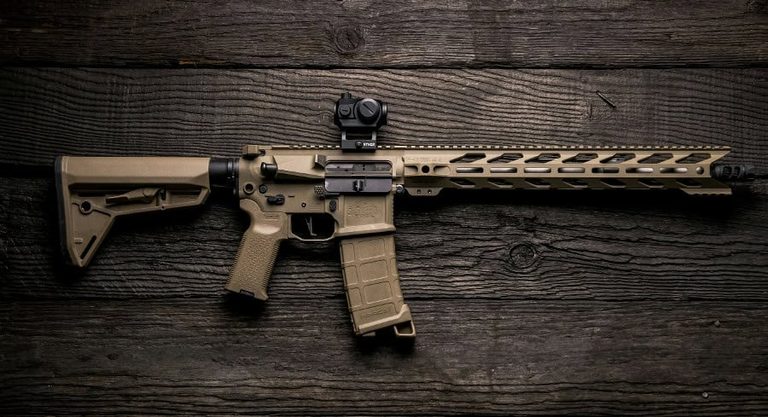
Two weeks before the U.S. Supreme Court hears arguments, gun‑rights advocates have filed a decisive brief urging the justices to reject recent bans on AR‑15‑style semi‑automatic rifles in Cook County, Illinois, and the state of Connecticut. The brief, prepared by Cooper & Kirk attorney David H. Thompson and co‑counsel, represents the Second Amendment Foundation (SAF) and its partners in the consolidated cases Viramontes v. Cook County and Grant v. Higgins.
Legal background
The lawsuits stem from two separate challenges. The Cook County case, filed in 2021, contests a local ordinance that prohibited commonly owned semi‑automatic firearms—a rule that later served as the model for Illinois’ statewide ban. The Connecticut case targets state laws that ban semi‑automatic rifles by specific model name and by certain features such as pistol grips and stocks.
Both suits rely on the Supreme Court’s landmark decisions in District of Columbia v. Heller (2008) and New York State Rifle & Pistol Association v. Bruen (2022). Those rulings affirmed that the Second Amendment protects firearms “in common use” by law‑abiding citizens for lawful purposes.
SAF’s argument
SAF Executive Director Adam Kraut told the Court that the legal question has already been answered. “The analysis the Supreme Court has to do to conclude these laws are unconstitutional has already been decided,” Kraut said. “We explicitly say in today’s reply that the Court need not break any new ground here – just reiterate and apply what it has already said.”
SAF contends that the Second Amendment protects the most popular class of rifles in the country, which are owned by tens of millions of law‑abiding Americans. The brief points out that the Court itself called the AR‑15 “the most popular rifle in the country” in its 2025 decision in Smith & Wesson Brands, Inc. v. Estados Unidos Mexicanos.
Government’s position
Attorneys for Cook County and Connecticut argue that the bans should be evaluated under an “unusually dangerous weapons” test, asserting that lawmakers may prohibit firearms deemed exceptionally lethal or disproportionate to personal self‑defense. SAF dismisses this test as a backdoor attempt to revive the interest‑balancing approach the Court expressly rejected in Bruen.
Who is involved
In the Cook County case, SAF is joined by the Firearms Policy Coalition and private citizens, including lead petitioner Cutberto Viramontes. In the Connecticut case, SAF partners with the Connecticut Citizens Defense League and private citizens such as Eddie Grant Jr., suing the Connecticut Department of Emergency Services and Public Protection Commissioner Ronnell Higgins.
SAF founder and Executive Vice President Alan M. Gottlieb noted the logistical challenge of preparing briefs for two separate government teams. “When the Supreme Court agreed to hear SAF’s two cases on these unconstitutional firearms bans, it meant that we had to work twice as hard to prepare briefs like the one we filed today,” Gottlieb said. “We are more than prepared to take all‑comers on the issue and look forward to presenting our case before the highest court in the land.”
Upcoming oral arguments
The Supreme Court is scheduled to hear oral arguments on the consolidated cases on Wednesday, December 2. SAF plans to livestream the audio feed and provide real‑time legal commentary on its X page.
These cases represent a critical test of the Court’s interpretation of the Second Amendment and could shape the future of firearm regulation across the United States.
Original reporting: Tampa Free Press — read the source article.