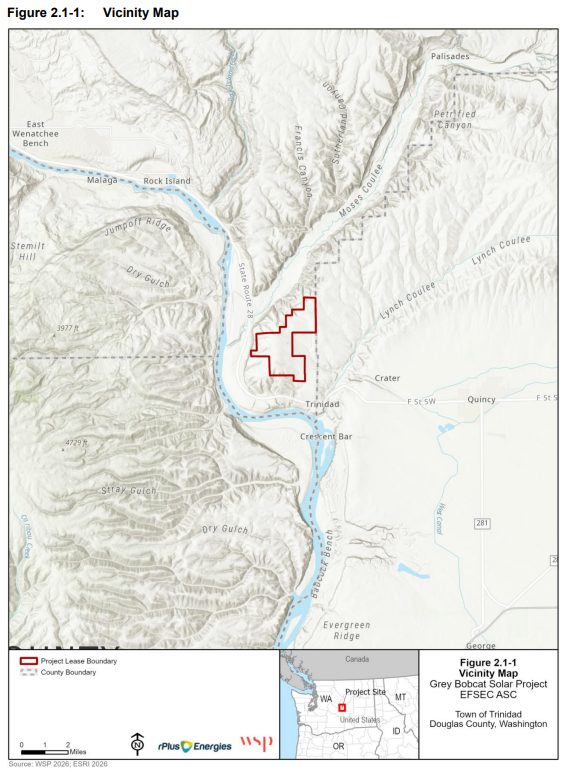
Douglas County, Washington – Renewable‑energy developer Grey Bobcat Solar, LLC is moving forward with a proposal to build what would become the state’s largest solar photovoltaic facility of its type. The company submitted an application to the Washington State Energy Facility Site Evaluation Council on November 12, seeking certification for a 2,904‑acre site two miles northwest of Trinidad, adjacent to the Columbia River and State Route 28.
Project details and capacity
The plan calls for solar arrays, inverters, a project substation and a 4‑hour, 200‑megawatt battery energy storage system (BESS). Together, the solar generation and storage capacity would produce roughly 200 megawatts of alternating current, enough to power tens of thousands of homes and to provide a reliable, dispatchable source of clean electricity.
Comparison to existing Washington solar farms
According to Cleanview, a data‑tracking website, the next‑largest solar installations in the state are Lund Hill Solar at 150 MW, and both Ostrea Solar, LLC and Goose Prairie Solar at 80 MW each. If approved, Grey Bobcat’s project would surpass those facilities by a substantial margin.
Local outreach and regulatory steps
Grey Bobcat Solar began outreach to state, regional, tribal and local agencies in November 2025. The application lists meetings and letters sent to the Washington Department of Natural Resources, Douglas County officials, the Yakama Nation, regional public utility districts and the Douglas County Board of Commissioners. The company plans to hold a public hearing by mid‑January, though a specific date has not yet been set.
Economic impact
The developer estimates the project will generate about $113 million in state and local tax revenue over its projected 40‑year lifespan. That revenue could support county services, schools and infrastructure, aligning with community‑focused economic development goals.
Regulatory timeline
After the application review stage, the project will undergo an environmental review, followed by land‑use adjudication, a final recommendation to the governor, and the issuance of necessary permits and compliance certifications. The process reflects Washington’s thorough approach to balancing renewable‑energy growth with environmental stewardship.
What this means for local residents
Supporters argue the project will bring jobs, tax dollars and a reliable source of clean power to a region that has historically relied on fossil‑fuel generation. Critics, including some local environmental groups, have raised concerns about land use, wildlife impacts and the visual footprint of a large solar array. The upcoming public hearing will give residents an opportunity to voice both support and concerns.
As the state continues to pursue its clean‑energy goals, the Grey Bobcat Solar proposal illustrates how private investment can complement public policy, potentially delivering both economic benefits and a reduction in carbon emissions for Douglas County and the broader Pacific Northwest.
Original reporting: KHQ Spokane (news) — read the source article.