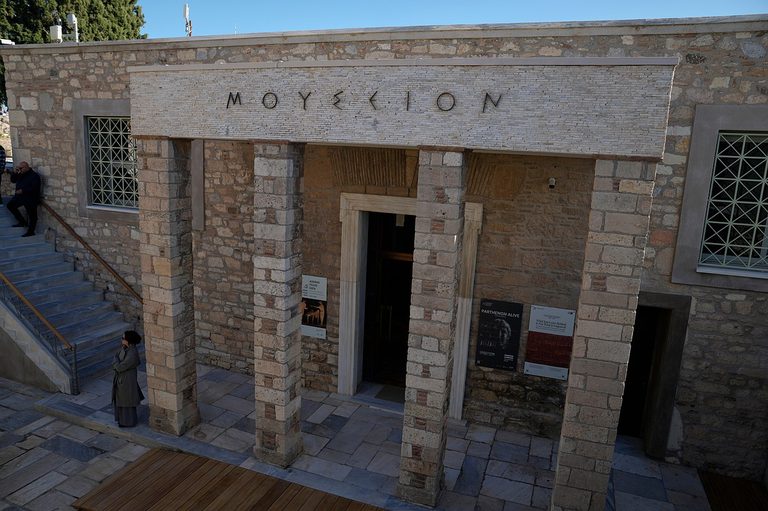
ATHENS, Greece – After a seven‑year, €6.2 million restoration, the museum that has stood on the Acropolis since 1874 reopened on Monday. The project, financed through public funds and private donations, was overseen by Culture Minister Lina Mendoni, who emphasized the building’s original purpose as a museum rather than an office space.
Historic building given new life
The stone structure, often overlooked by visitors to the Acropolis, was closed to the public in 2007. Its collections were transferred to the newer Acropolis Museum at the foot of the hill, and the building served as an administrative office for years. Mendoni called the conversion “an affront” and said it was “inconceivable” for such a historic site to be relegated to storage.
“We therefore decided that the museum should reopen in accordance with its original purpose,” she said at the inauguration.
Modern upgrades and new displays
The renovated museum now features digital displays that trace the Acropolis’s 2,500‑year history, a viewing gallery where Culture Ministry technicians will continue restoration work on ancient objects, and a collection of artifacts never before exhibited to the public.
Visitors will also see the renowned sculptures that were carefully lowered from the building to the Acropolis Museum during the 2007 closure.
Prime Minister’s remarks
Prime Minister Kyriakos Mitsotakis attended the opening ceremony and called the event “another milestone for Greece’s cultural heritage.” He used the occasion to reaffirm Greece’s long‑standing demand for the return of the Parthenon Sculptures held by the British Museum.
“The rightful home of these priceless masterpieces is here, beneath the Attic light and in direct proximity to the temple to which they belong,” Mitsotakis said, adding that Greece would not accept a loan arrangement. “No solution and no agreement can be based on the recognition of foreign ownership over our national treasures. I reaffirm my commitment that we will continue this effort with responsibility, seriousness and determination, and in the end, we will succeed.”
Tourism impact
The Acropolis remains Greece’s most visited ancient site, recording more than 4.6 million admissions last year. The museum’s reopening is expected to enhance the visitor experience and provide deeper educational opportunities for both locals and tourists.
Restoration work on the Parthenon itself continues, with heavy scaffolding recently removed for the first time in years, signaling a broader effort to preserve the historic hilltop complex.
With its new facilities and expanded exhibits, the museum aims to serve as a bridge between Greece’s rich past and the modern world, inviting future generations to explore the legacy of the Acropolis.
Original reporting: Texarkana Gazette — read the source article.