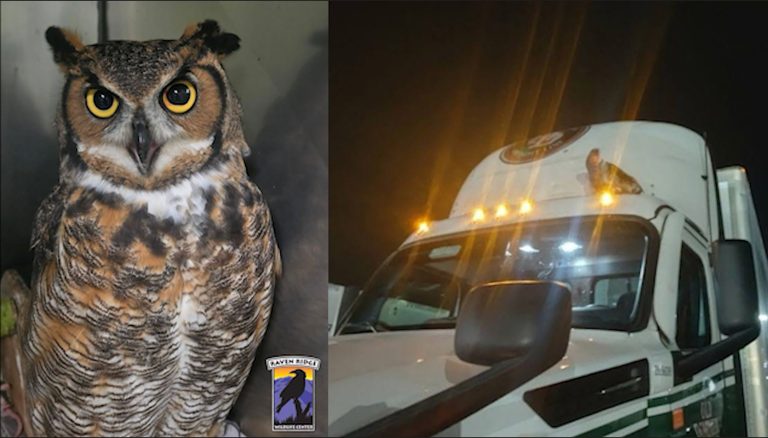
On Sunday evening in Carlisle, Pennsylvania, a great horned owl became an unlikely passenger on a freight truck traveling about 65 miles per hour. The bird lodged head‑first in the fiberglass air dam of the tractor‑trailer and remained stuck for roughly 70 miles before the driver realized something was amiss.
How the owl was discovered
John, a driver for Old Dominion Freight Line, Inc., noticed the owl after the truck had traveled a considerable distance. He sent photos of the injured bird to the Raven Ridge Wildlife Center, a local wildlife‑rehabilitation facility, via Facebook. The center’s staff described the images as “stunning” and expressed amazement that the owl had survived the high‑speed impact.
Rescue and initial assessment
Freight‑line personnel carefully freed the owl from the air dam. Because the bird could not fly on its own, they called Raven Ridge Wildlife Center for assistance. When the owl arrived at the center, staff noted that its feathers were ruffled, but there were no broken wings or legs and no open wounds. The only visible injury was damage to its left eye, including blood and swelling.
Veterinary care and outlook
Veterinarians performed a full eye examination and were surprised that the trauma was limited to the eye area. The owl’s overall condition was better than expected given the speed and distance of the collision. Center officials called the incident “the luckiest owl we’ve ever seen.”
Next steps for the bird
Raven Ridge Wildlife Center plans to monitor the owl’s recovery closely. Once cleared by the veterinary team, the center intends to transport the bird back the 70‑mile route to the site of the original collision for a safe release into the wild.
Community response
The unusual rescue has drawn attention on social media, with many locals expressing gratitude to the freight‑line crew and the wildlife center for their quick action. The story highlights the importance of community cooperation in protecting Pennsylvania’s wildlife.
Original reporting: WPBF (Treasure Coast / Hearst) — read the source article.