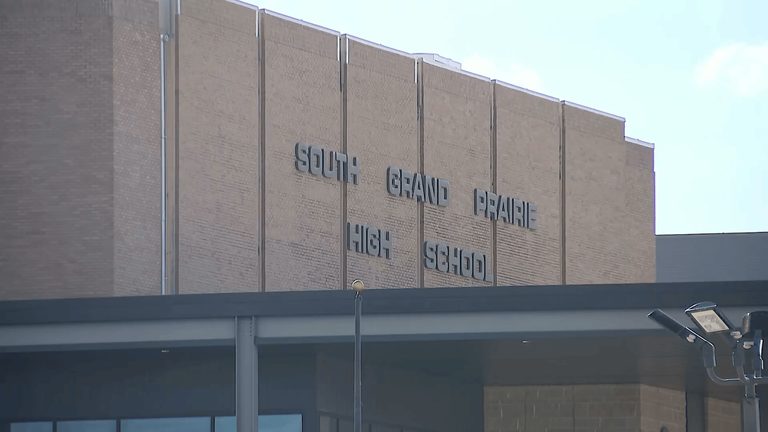
Grand Prairie ISD faces a federal lawsuit filed by parents of Ana Mota, a senior at South Grand Prairie High School, who was barred from playing the male character Seymour in the school’s production of Little Shop of Horrors. The plaintiffs argue the district’s decision violates Title IX, the 1972 federal civil‑rights law that prohibits sex discrimination in any education program receiving federal funds.
Legal basis of the suit
The complaint contends that Title IX’s protections extend to extracurricular activities, including theater, and that Grand Prairie ISD cannot exclude a student from a role solely because she is female. The suit further asserts that the district’s reliance on Texas Senate Bill 12 – a 2025 law that restricts diversity, equity and inclusion (DEI) programs and any instruction or programming involving sexual orientation or gender identity – does not override the federal statute. The plaintiffs note that SB 12 does not expressly forbid students from portraying characters of the opposite sex.
Background on Senate Bill 12
SB 12, enacted in 2025, limits DEI initiatives, bans school employees from assisting a student’s “social transitioning,” and restricts instruction related to sexual orientation or gender identity. Several provisions of the law are already being challenged in federal court. In GSA Network v. Morath, plaintiffs argue that four sections of SB 12 violate constitutional and statutory protections. A federal judge has temporarily blocked Houston, Katy and Plano ISDs from enforcing those four provisions while the case proceeds, though the injunction does not cover Grand Prairie ISD.
Parents’ request to the court
The lawsuit asks the district court to issue a restraining order or injunctive relief that would restore the production of Little Shop of Horrors, reinstate Ana Mota in the role of Seymour, and prohibit the district from replacing her because of her gender. The plaintiffs claim Mota was “excluded” from the role and “offered no equivalent educational opportunity.” They argue that if Grand Prairie ISD’s interpretation of SB 12 conflicts with Title IX, the Supremacy Clause of the U.S. Constitution makes federal law controlling.
Student’s perspective
Mota told NBC 5 that she was confused by the district’s decision. “In Shakespearean theater there was a lot of cross‑gender casting, males playing females. Historically a female playing a man or a man playing a female has never been outlandish,” she said. She added that high‑school theater often casts based on who auditions, noting that many theater programs have fewer male participants, which sometimes leads to female students filling traditionally male roles.
District’s response
Grand Prairie ISD declined to comment after the lawsuit was filed. The district’s legal team has not publicly explained how it interpreted SB 12 to justify the casting change.
Implications for schools
If the court finds that Title IX preempts the district’s application of SB 12, it could set a precedent for other Texas school districts facing similar disputes over gender‑based participation in extracurricular activities. The case also highlights the tension between state‑level restrictions on DEI programming and longstanding federal civil‑rights protections.
What’s next?
The plaintiffs have asked for a preliminary injunction, but the court has not yet ruled on that request. The lawsuit will likely proceed through the federal docket, potentially joining the broader litigation challenging SB 12’s constitutionality.
Original reporting: Richardson, TX News (HLL/CB) — read the source article.