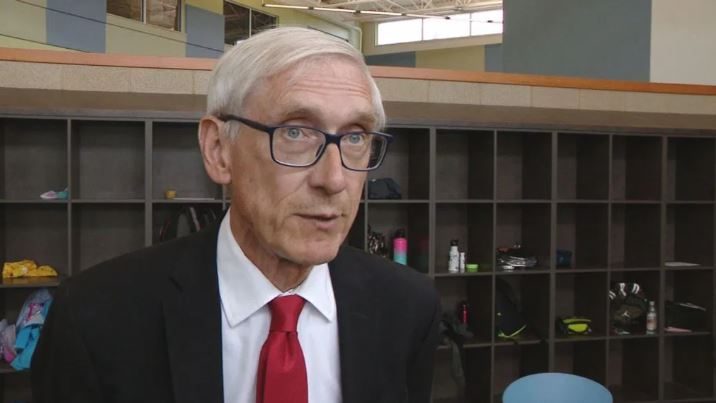
Wisconsin Governor Tony Evers announced Friday that he has granted commutations to 14 individuals, marking the first time a governor in the state has used this power since former Gov. Tommy Thompson. The action underscores the administration’s commitment to rehabilitation and second‑chance opportunities for those who have shown genuine reform.
Commution process and hearing details
The Commutation Advisory Board held public hearings on Aug. 21 and Sept. 18, 2026, hearing 24 applicants. Ten applications were denied, while the remaining 14 received commutations based on the board’s recommendations and the governor’s review.
North‑East Wisconsin recipients
Among the commuted cases were Sammy Cole of Calumet County and Amanda Weaver of Marinette County. Cole, convicted of armed robbery with threat of force in 2001 and sentenced to 35 years, has served 24 years. During his incarceration he earned a high school equivalency diploma, completed multiple vocational certificates, and participated in mental‑health and re‑entry programs. He also worked as a service‑dog trainer and mentor to younger inmates. The governor reduced his sentence to 28 years, allowing him to serve four more years before moving to ten years of extended supervision.
Weaver was sentenced in 2008 to 30 years for a series of burglaries targeting churches and a restaurant. After 17 years she earned an HSED as valedictorian, an associate degree in business management, and is pursuing further education in entrepreneurship and cosmetology. She completed extensive therapeutic programming and volunteered in community projects. Her sentence was adjusted to permit immediate release from confinement, followed by two years of extended supervision.
Rehabilitation focus of Executive Order #287
Executive Order #287, which authorizes these commutations, states that the process “promotes rehabilitation by rewarding positive efforts of incarcerated individuals who demonstrate personal growth and a commitment to change.” The order differentiates commutations from pardons, noting that a commutation can shorten a current sentence or make an inmate eligible for earlier supervised release, whereas a pardon restores civil rights after the full sentence is completed.
Governor Evers’ broader clemency record
Governor Evers has made clemency a hallmark of his tenure, issuing more than 2,443 pardons—more than any previous Wisconsin governor. His use of executive clemency reflects a belief that faith‑based values, family stability, and personal responsibility are essential to restoring individuals to productive community roles.
Community reactions
Family members of both Cole and Weaver expressed gratitude for the governor’s decision, emphasizing the hope that the commutations will allow their loved ones to reunite with families and contribute positively to society. Local faith leaders also praised the move as an example of mercy aligned with Christian teachings on redemption.
Critics, including some victims‑rights advocates, cautioned that the reductions should be balanced with public safety considerations. They noted that the governor’s office has provided detailed background checks and risk assessments before each commutation.
What comes next
Both Cole and Weaver will transition to extended supervision, during which they must comply with monitoring requirements and continue community service. The governor’s office indicated that additional commutation hearings are scheduled for early 2027, suggesting that this rehabilitative approach will remain a key component of Wisconsin’s criminal‑justice policy.
Original reporting: Appleton, WI News Feed (HLL/CB) — read the source article.