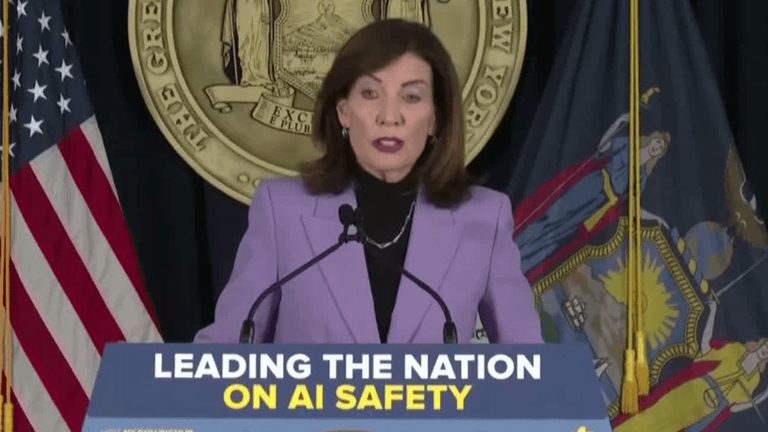
Albany, NY – One week after Election Day, Governor Kathy Hochul told reporters she plans to keep the conversation about New York’s redistricting reforms moving forward. The governor referenced the constitutional amendment that passed in the final days of the 2026 legislative session, which would allow the state legislature to draw new congressional and legislative maps in the middle of a decade and to engage in partisan redistricting if the Independent Redistricting Commission fails to produce a plan.
Amendment details and next steps
The amendment, approved by the state legislature, requires two additional actions before it can take effect. First, the measure must be passed again during the next legislative term, which begins on Jan. 1, 2027. Second, it must be approved by voters in a statewide election held on Election Day in 2028.
Governor Hochul said she will meet with House and Senate leaders, including Representative Jeffries, to discuss how the state should approach the new redistricting framework. “We’re halfway there, already passed one session,” she said, noting that the political landscape has shifted since the last redistricting cycle and that the state should not assume the same outcomes will repeat every two years.
Criticism of former President Trump’s mid‑year redistricting push
During the same remarks, Hochul criticized former President Donald Trump’s attempt earlier this year to pressure Republican‑run states into adopting mid‑year redistricting plans. “It was really abhorrent what President Trump attempted to do in this mid‑year redistricting and really trying to force Republican states to engage in this and create districts that, you know, had been set until the next redistricting,” she said. While she noted that the effort did not affect this year’s election, she warned that future elections occur every two years and that the state must consider long‑term implications.
Implications for New York voters
If enacted, the amendment would give the legislature greater flexibility to respond to demographic changes, such as the out‑migration from New York City to upstate regions like the Mohawk Valley and Capital Region. Supporters argue that this flexibility could help ensure representation reflects shifting populations, while opponents fear it could open the door to partisan gerrymandering that undermines fair competition.
State officials have not yet released detailed projections on how the amendment might reshape district boundaries. However, the governor’s call for a “long‑term” view suggests that policymakers will weigh both demographic trends and the desire for stable, predictable electoral maps.
Next legislative actions
Legislators are expected to introduce a bill in the 2027 session that would codify the amendment’s provisions. The bill will likely be debated in both chambers before being sent to voters for final approval. Advocacy groups on both sides of the issue have pledged to lobby lawmakers, emphasizing the importance of transparency and public input throughout the process.
Governor Hochul concluded by reaffirming her commitment to working with legislative leaders to craft a redistricting approach that balances flexibility with fairness, ensuring New Yorkers have a voice in how their districts are drawn for years to come.
Original reporting: CBS 6 WRGB Albany (local) — read the source article.