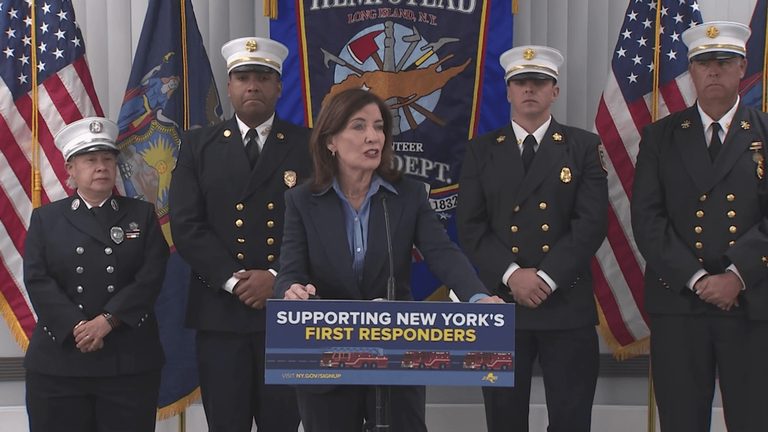
New York State – Governor Kathy Hochul announced Thursday that she has signed a bill dramatically expanding the state personal income tax credit for volunteer first responders. The legislation lifts the credit for eligible volunteer firefighters from $200 to $800 and raises the credit for married volunteer emergency‑medical‑technician (EMT) workers from $400 to $1,600. Hochul framed the move as a tangible thank‑you to the men and women who sacrifice personal time, missed family events, and sleepless nights to keep neighborhoods safe.
Legislative background and intent
The bill, co‑sponsored by Assemblymember Angelo Santabarbara, had not been altered for nearly two decades. Santabarbara noted that recruitment and retention remain the biggest challenges for volunteer fire departments and ambulance services across the state. “Supporting the people who serve today while encouraging the next generation to step forward is important to the future of our local emergency services,” he said.
Financial impact on volunteers
By quadrupling the credit, the state hopes to put more money back into the pockets of volunteers who often balance demanding day jobs with unpaid emergency duties. The credit is claimed on individual state income tax returns, meaning eligible volunteers can reduce their tax liability by up to $800 for single firefighters or $1,600 for married EMTs, providing direct financial relief.
Additional support for equipment
Alongside the tax credit, Governor Hochul announced $1 million in state funding for the Village of Hempstead Volunteer Fire Department in Nassau County. The money will be used to purchase new radio equipment, replacing outdated units that have limited functionality inside burning structures. Improved communications are expected to enhance safety for responders working in hazardous conditions.
Community response
Local fire chiefs and EMT leaders praised the legislation, calling it a long‑overdue acknowledgment of the sacrifices made by volunteers. Many highlighted how the credit could help families cover everyday expenses such as home repairs, school fees, and missed work hours.
Implementation timeline
The tax credit increase takes effect for the 2027 tax year. Volunteers will need to provide documentation of their service status when filing state returns. The state Department of Taxation and Finance will issue detailed guidance later this fall.
Broader implications
New York’s move aligns with a growing trend among states to bolster support for volunteer emergency services, recognizing their critical role in rural and suburban areas where full‑time departments are scarce. By offering both tax relief and equipment upgrades, the administration aims to strengthen community resilience and encourage new volunteers to step forward.
Governor Hochul concluded, “I am really proud to announce this bill that recognizes the sacrifices of our EMT workers and firefighters. It’s a small form of gratitude, and I hope it eases the financial burden on those who give so much for our safety.”
Original reporting: CBS 6 WRGB Albany (local) — read the source article.