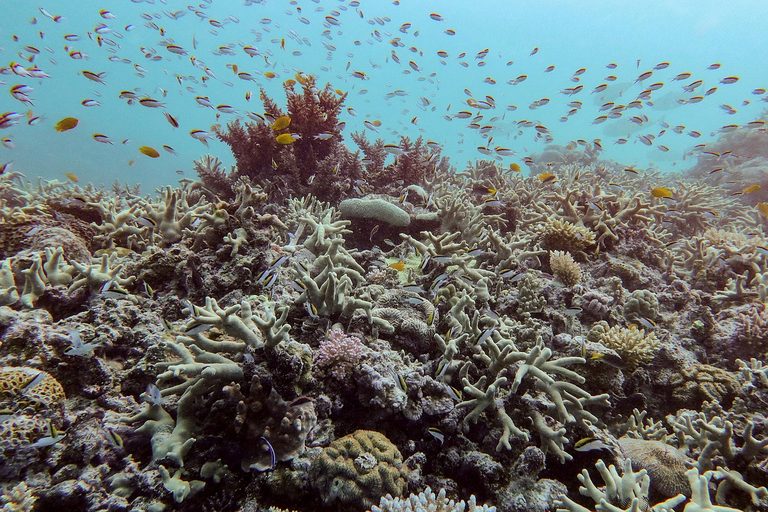
A worldwide assessment released Thursday by the International Union for Conservation of Nature (IUCN) warns that 96% of shallow‑water coral reef ecosystems are already classified as critically endangered and could disappear by 2075. The report, unveiled on the sidelines of a United Nations biodiversity conference in Albania, represents the first comprehensive Red List of Coral Reef Ecosystems.
Key Findings
The assessment covered 127 tropical and subtropical ecoregions, encompassing roughly 72,726 square miles (188,362 square kilometers) of coral reefs. It identified warming oceans and heat‑wave events as the single most consistent driver of reef decline worldwide. Iconic reef systems—including Australia’s Great Barrier Reef, the Coral Triangle in the Western Pacific, the Mesoamerican Barrier Reef, and the Red Sea reefs—are all listed at the highest threat level.
When a reef collapses, hard‑coral structures are replaced by algae, rubble and sponges, eliminating the diverse habitats that support countless marine species, commercial fisheries and tourism‑driven economies. Reefs also act as natural buffers against coastal erosion and storm surge, protecting nearby communities.
Scientific Perspective
“The risk of coral reef collapse is escalating, but this must be a wake‑up call rather than a cause for despair,” said Mishal Gudka, scientific lead of the IUCN assessment. Gudka emphasized that coral reefs have demonstrated a remarkable capacity to recover after severe bleaching events, noting that resilient pockets of reef can still survive if proper protections are put in place.
Grethel Aguilar, IUCN Director General, added, “Coral reefs are one of the clearest vital signs of the ocean’s health.” She called for “ambitious emissions reductions, stronger protection and restoration efforts, and sustained investment in resilient coastal ecosystems and the communities that depend on them.”
Context and Recent Research
The new findings echo earlier research. A recent study published in *Nature* by the IUCN indicated that nearly 44% of reef‑building coral species face an elevated risk of extinction due to climate change. Additionally, a survey from a year ago reported that 84% of the world’s reefs have experienced harmful bleaching, the most intense recorded to date.
2024 was the hottest year on record for the planet, with average annual sea‑surface temperatures reaching a historic 20.87 °C (69.57 °F) in non‑polar oceans. This heat is being absorbed by the seas, further stressing coral ecosystems.
What Can Be Done
Beyond reducing greenhouse‑gas emissions, experts stress the importance of tackling local stressors such as pollution, overfishing and unchecked coastal development. These measures can improve reef resilience and buy time for broader climate action.
“We know what is needed: ambitious emissions reductions, stronger protection and restoration efforts, and sustained investment in resilient coastal ecosystems and the communities that depend on them,” Aguilar said.
The IUCN assessment serves as a stark reminder that coral reefs—often called the “rainforests of the sea”—are at a tipping point. Immediate, coordinated action at both the global and local levels will be essential to preserve these vital marine habitats for future generations.
Original reporting: Texarkana Gazette — read the source article.