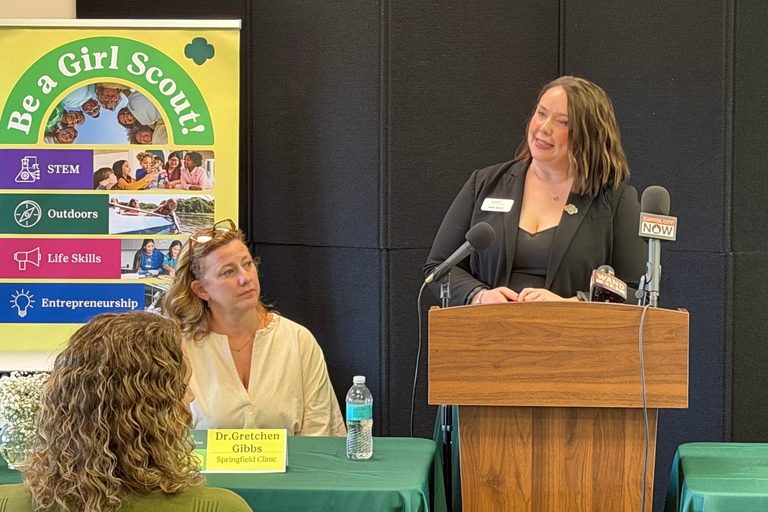
SPRINGFIELD, Ill. – At a news conference Thursday, the Girl Scouts of Central Illinois (GSCI) presented a study titled “The Future of Girlhood in Central Illinois.” The report documents a range of challenges confronting girls across the 38 counties the organization serves.
Key findings reveal widespread hardship
According to GSCI Vice President of Strategy Kaitlin Bostick, the study tracks issues such as poverty, body dissatisfaction, eating disorders, declining healthy habits, reduced athletic participation, gaps in STEM and school engagement, rural isolation, mental‑health struggles, personal‑safety concerns, adverse childhood experiences, digital‑connectivity gaps, bullying, substance use and outdoor‑equity.
Among the most striking statistics:
- Four in ten households reported an inability to afford basic necessities.
- One in six families lack reliable transportation, contributing to isolation.
- Twenty‑four percent of high‑school girls said they have been bullied.
- More than half of surveyed girls indicated persistent sadness or depression.
Medical professionals stress early intervention
Springfield Clinic pediatrician Dr. Gretchen Gibbs emphasized the importance of foundational habits, stating, “Sleep, good nutrition, regular movement are not just physical‑health recommendations; they directly affect mood, concentration, stress, anxiety, energy, and overall well‑being.”
Memorial Health pediatrician Dr. Mackenzie Haywood echoed the concern, noting a daily influx of teenage girls seeking treatment for anxiety and depression, many of whom remain undiagnosed or resistant to existing therapies.
Girl Scouts propose community‑driven solutions
The organization cautions against labeling girls’ experiences merely as “problems” or “crises.” Instead, GSCI describes each girl’s life as “an extraordinary journey that requires intentional, real‑world safe spaces.”
High‑school student Alivia Hopkins, a GSCI board member from Pleasant Plains, urged adults to listen more closely: “What girls need is less filtering and more active listening.” The report suggests that pediatricians can serve as first‑line defenders, while community groups, schools and families create supportive environments.
Local response and next steps
Community leaders and parents have expressed interest in partnering with the Girl Scouts to develop mentorship programs, expand access to mental‑health resources, and improve transportation options for rural families. GSCI plans to host a series of town‑hall meetings over the coming months to gather input and coordinate action.
By highlighting both the depth of the challenges and practical pathways forward, the study aims to rally Springfield’s families, faith communities and civic organizations around the shared goal of safeguarding the well‑being of the region’s young women.
Original reporting: Capitol City Now (WTAX 1240 Springfield) — read the source article.