The Ghent Open Air Market runs on Saturdays from April through November, and by 8 a.m. the best spots are already gone. That’s not a crowd problem — it’s just how the market works. Vendors who know the drill show up at first light, and the people who’ve been coming for years know to match them.
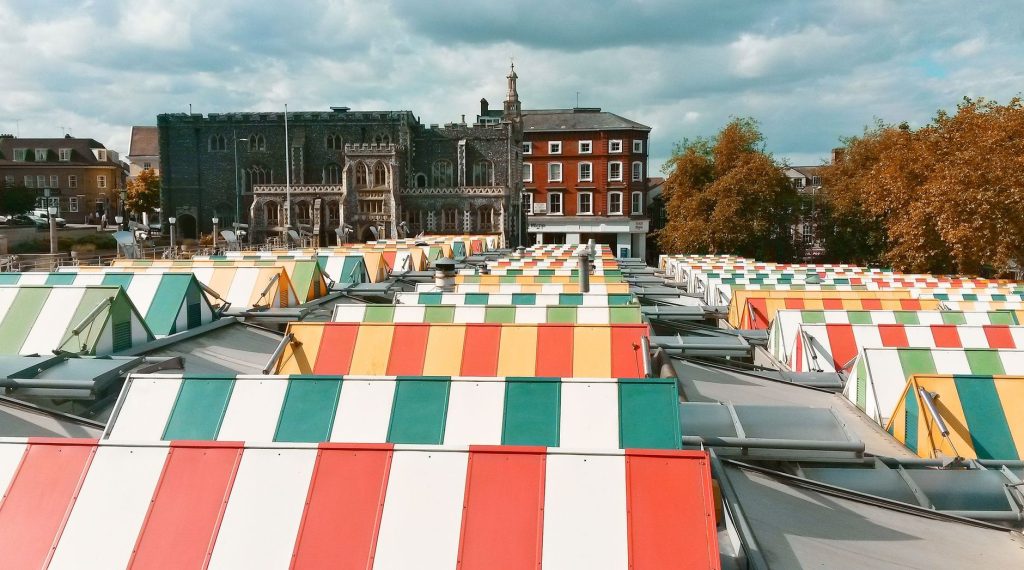
The market sets up in the parking lot off Llewellyn Avenue near the intersection with Colonial Avenue, which puts it squarely in the middle of one of Norfolk’s oldest residential neighborhoods. There’s no real entrance, no ticketing, no printed map. Folding tables and canopies extend in rough rows, and foot traffic moves in every direction at once. The scale is manageable — maybe forty or fifty vendors on a good weekend — which keeps it from tipping into overwhelming territory.
The produce changes with the season, but there’s always something worth stopping for. In late spring it’s strawberries and spring onions; by July the tomato tables get serious, with six or seven varieties laid out in flats. A few farmers drive in from the region’s outer counties and bring things that don’t often show up in grocery stores — dragon tongue beans, lemon cucumbers, ground cherries that taste vaguely of pineapple. One table near the south end has sold eggs from heritage breed chickens for years, and there’s usually a line.
Beyond produce, the vendor mix runs toward handmade goods: pottery, beeswax candles, locally roasted coffee, small-batch jams with handwritten labels. The quality is uneven in the way that all real markets are uneven, and that’s part of the point. Not every piece of pottery needs to be exceptional. What matters is that most of it was made within a reasonable drive of where it’s being sold.
The food vendor situation has improved steadily over the past few seasons. A tamale operation near the center has developed a following that stretches the line into the adjacent row. There’s usually at least one baker with sourdough loaves and something sweet — galettes, turnovers, whatever the fruit situation allows that week. Hot coffee appears in multiple places, and on cool October mornings, the demand is obvious.
Dogs are present in large numbers. This is simply a fact of the market. Well-behaved ones, mostly, but it’s worth knowing before arriving with a nervous animal of your own.
Parking on the surrounding streets fills up fast, and the lot itself is for vendors. Walking from a few blocks away is easier than circling. The market closes at noon, sometimes earlier if business has been brisk and vendors have sold down their stock. Arriving after 11 a.m. means working with what’s left, and what’s left is never the tamales.
Cash is preferred but not universal — several vendors have started taking cards through phone readers, which helps. Budget for however much can reasonably be carried home. The habit the market tends to create is buying slightly more than planned and eating very well for the first half of the week.
It’s free to walk through. The cost is just what gets carried out the other end.