Georgia State University (GSU) in downtown Atlanta is set to unveil the final phase of its long‑awaited greenway expansion on Panther Quad this month. The project, spurred by an $80 million gift from the Woodruff Foundation in November 2024, is part of a broader $107 million campus transformation aimed at giving the urban university a true “college‑town downtown” feel.
Leadership vision drives the redesign
University President M. Brian Blake has championed the vision of a more traditional, walkable campus for years. “These transformational projects will likely represent the most consequential enhancements to student engagement in the history of Georgia State,” Blake wrote, underscoring the administration’s commitment to creating vibrant, safe outdoor spaces for students and faculty.
What the greenway will bring
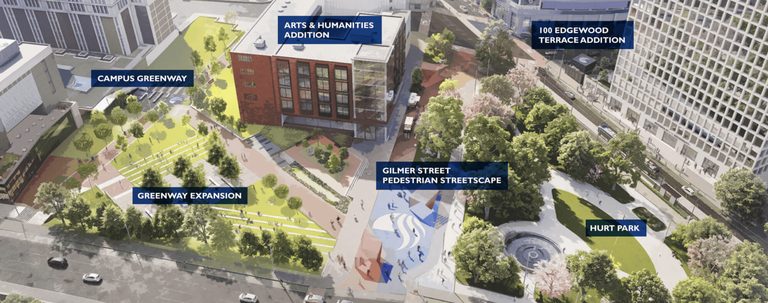
The expanded greenway will stretch across Panther Quad, linking the newly renovated area with nearby Woodruff Park. It will feature additional food trucks, cafés and informal “third spaces” where students can relax, study and socialize. Enhanced pedestrian infrastructure will also support micromobility options such as bicycles and scooters, improving safety and connectivity throughout the campus.
Integration with city transit
GSU’s proximity to the Atlanta Streetcar—often criticized for low ridership—could see increased use as the greenway creates a more cohesive campus layout. The streetcar runs through large portions of the university’s downtown footprint, offering students and visitors a convenient, low‑emission transit option.
Historic buildings make way for the future
To accommodate the new design, GSU has removed two historic structures. Kell Hall, a former parking garage turned academic building that stood for over 75 years, was demolished in 2019. Sparks Hall, named for the university’s first president, was torn down between late 2025 and early 2026. Their removal clears space for the greenway and future development.
Beyond the greenway: upcoming projects
Three additional projects are slated to begin in the first half of 2027: the façade and facilities upgrade of the 100 Edgewood Building, an expansion and façade renovation of the Arts and Humanities Building, and the Gilmer Street transformation. The Gilmer Street project will pedestrianize a key corridor, linking the greenway directly to Hurt Park and completing the downtown campus’s pedestrian network.
Community impact
The greenway’s development aligns with Atlanta’s broader goals of fostering walkable, mixed‑use neighborhoods that support families and local businesses. By creating a safer, more attractive environment for students, the project also benefits nearby residents and entrepreneurs who will see increased foot traffic and economic activity.
Looking ahead
While the university originally hoped to finish the project in time for the 2026 World Cup, the timeline has shifted slightly. Nonetheless, GSU officials are confident the greenway will open this month, marking a significant milestone in the university’s decade‑long plan to reshape its downtown presence.
Original reporting: SaportaReport — read the source article.