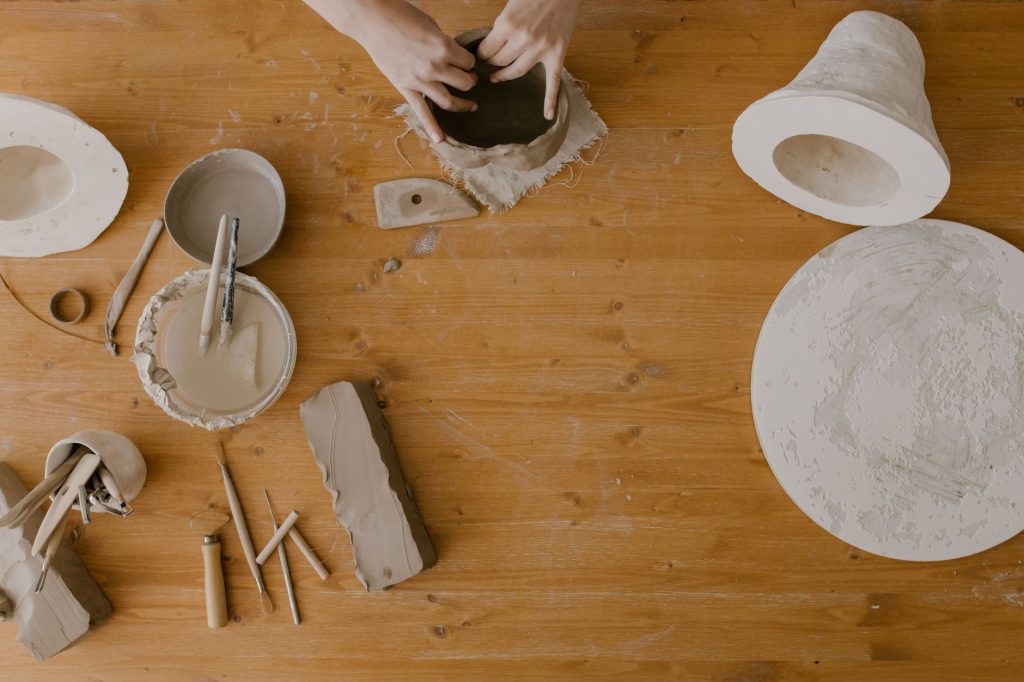
On a weekday morning, before the heat settles over the north side of Evansville, the studio at Garvin Hill Pottery is already running. The wheel hums, clay moves, and the shelves along the back wall hold dozens of pieces in various states of drying — mugs, bowls, vases, the occasional oddly shaped experiment that didn’t quite resolve into a plan. It is the kind of place that takes about thirty seconds to understand: someone is here because they love this, and they have been doing it long enough to be very good at it.
Garvin Hill operates as both a working studio and a retail shop, which is a combination that gets rarer every year. What’s on the shelves was made here, by hand, in this room. The work runs toward functional ware — pieces meant to hold coffee, serve food, sit on a windowsill without being precious about it. Glazes tend toward earthy tones and muted blues, though there’s enough range that returning shoppers usually find something they haven’t seen before. Prices are reasonable for handmade ceramics: mugs typically run in the fifteen to twenty-five dollar range, larger bowls a bit more. Nothing is priced like a gallery in a bigger city, which is part of the point.
The studio also offers wheel-throwing classes, which is where things get genuinely interesting for people who have never touched clay outside of a grade-school art project. Sessions are kept small — usually four to six people — and the instruction is patient without being condescending. First-timers tend to show up expecting to make a bowl and leave with something that looks more like a lopsided ashtray, which is exactly what happens, and which is also exactly the right way to begin. The instructors here have clearly taught enough beginners to know that the process is the point, not the product.
Class schedules vary by season, so checking ahead is worth the effort. A single session runs somewhere in the forty to sixty dollar range depending on the class type, and gift certificates are available, which makes this one of the more thoughtful options in Evansville when someone wants to give an experience instead of an object.
The shop itself is worth a stop even without signing up for a class. It’s not a large space, but it’s well-organized and easy to browse. Local buyers come back regularly, partly because inventory turns over and partly because owning something from a studio like this carries a different weight than buying a mass-produced piece from a home goods chain. There’s a specificity to handmade work — slight variations in glaze, a thumbprint still faintly visible on the base — that makes each piece a little different from the next.
Garvin Hill sits in a part of the north side that doesn’t attract a lot of foot traffic on its own, so most visitors come deliberately. That’s fine. The studio doesn’t need to be discovered; it needs to be used. People who go once tend to go back, either to buy, to take another class, or just to watch the wheel for a few minutes before they have to be somewhere else.